

4. Conclusion
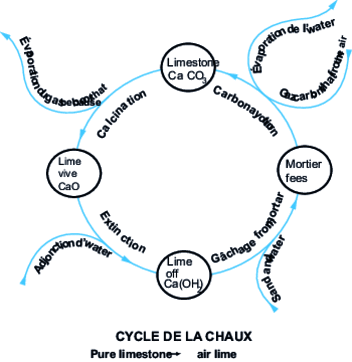
At the end of this article, it is clear that chemistry has made it possible to clearly understand the various reactions in which lime is involved: decarbonation, hydration, carbonation, aerial setting, hydraulic setting, pozzolanic setting (figure 7). In the words of the Royal Academy of Sciences' report on Vicat's research: "sound theories shed light on the practice of the art we practice".

Exclusive to subscribers. 97% yet to be discovered!
Already subscribed? Log in!
Conclusion

References
- (1) - COURTOIS (L.C.), DE CONTENSON (H.) - À propos des vases en chaux : recherches sur leur fabrication et leur origine - Paléorient, vol. 5, CNRS Éditions, n° 5-1, pp. 177-182 (1979).
- (2) - Caton l'Ancien - De agricultura, XIV Clauses pour la construction d'une ferme - Société d'Ed. Les Belles lettres, 342 p....
Websites
Technical association of the hydraulic binder industry (ATILH)
Chambre syndicale nationale des fabricants de chaux grasses et magnésiennes (National chamber of fatty and magnesium lime manufacturers)
École d'Avignon – Training center...
Exclusive to subscribers. 97% yet to be discovered!
Already subscribed? Log in!
Article included in this offer
"The superstructure of the building"
(
122 articles
)
Updated and enriched with articles validated by our scientific committees
A set of exclusive tools to complement the resources
