

14. General information on diagram presentation
14.1 Diagram classification
Diagrams are arranged in alphabetical order by the symbol of the first element in alphabetical order among the elements making up the alloy: then, for a given element, in alphabetical order by the symbol of the second element.
we find the Fe-C to C-Fe diagram.
However, in the diagrams, the base element of the most frequently encountered industrial alloys has generally been placed on the left.
Most of the diagrams are drawn at atmospheric pressure. When they include a gaseous component, the pressure is sometimes different and has been indicated in the text. The effects of an increase in pressure on phase equilibrium diagrams have been mentioned in the most remarkable cases.

Exclusive to subscribers. 97% yet to be discovered!
Already subscribed? Log in!
General information on diagram presentation

Diagram classification
In this folder, the diagrams are arranged in alphabetical order of the symbol of the element concerned, which comes first in alphabetical order among the elements making up the alloy; then, for a given element, in alphabetical order of the symbol of the second element.
Example
we find Fe-C to C-Fe.
However, in the diagrams, the base element of...
Binary alloys containing Ag

Binary alloys containing Al
Binary alloys containing As
As-Cu (arsenic-copper – figure )
This diagram has recently been completely revised. The relationships between phases and their compositions are now well known; there are apparently no other intermediate phases richer in arsenic than those shown in the diagram.
-
Phase structures
(Cu) : c. f. c.
Cu8As :...
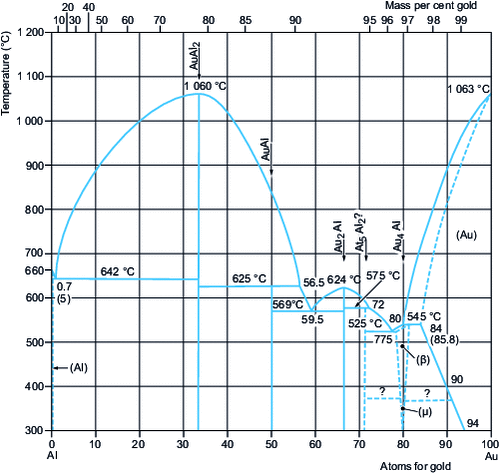
Au-containing binary alloys

Binary alloys containing either B, Be or Bi

Binary alloys containing C

Binary alloys containing either Ca, Cd or Ce

Binary alloys containing Co

Binary alloys containing Cr

Binary alloys containing Cu

Binary alloys containing Fe

Binary alloys containing Li, Mg or Mn

Binary alloys containing either Mo, or N, or Nb, or Ni, or O

Binary alloys containing either Pb, Sb, Sn or Ti

Exclusive to subscribers. 97% yet to be discovered!
Already subscribed? Log in!
Article included in this offer
"Studies and properties of metals"
(
199 articles
)
Updated and enriched with articles validated by our scientific committees
A set of exclusive tools to complement the resources
