Overview
ABSTRACT
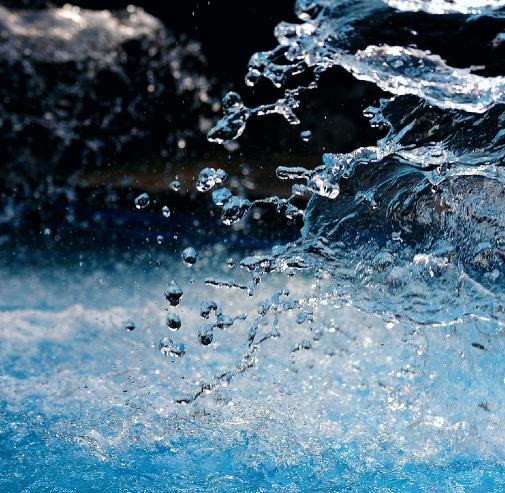
The phenomenon of atomizing (or spraying) is present in many industrial sectors ( automotive, surface treatment, medicine , perfumery, meteorology, etc.) Although the physical processes and mechanisms involved are generally quite simple in principle, the transition from a continuous liquid phase to a dispersed phase is carried out via the deformation and rupture of the surface, which involves a certain degre of complexity. This article deals with the main theoretical ways available in order to represent atomization.
AUTHOR
-
Luis LE MOYNE : Doctorate in mechanics, qualified to direct research - Engineer from the École nationale supérieure d'arts et métiers (ENSAM) - University Professor, Institut Supérieur de l'Automobile et des Transports, University of Burgundy, Nevers
INTRODUCTION
Droplet and particle formation processes are ubiquitous in industry and nature: combustion chambers in cars, aircraft, rockets, boilers, surface treatments (paints, coatings, cleaning...), heat treatments, inhalers in medicine, perfumery, agricultural spraying, printers and photocopiers, electronic component manufacture, fire extinguishers, but also in fog, rain, clouds, volcanic eruptions, geysers.... Generally speaking, the study of droplet and particle formation is common to emulsification, liquid separation, vaporization and condensation processes, whether we want to accelerate these processes by forming droplets or, on the contrary, slow them down by avoiding the appearance of droplets.
The physical processes and mechanisms involved are generally fairly straightforward in principle, but the transition from a continuous liquid phase to a dispersed phase is achieved by deformation and then rupture of the surface. This deformation appears subtly, at first as an imperceptible surface disturbance. Then, thanks to amplification by the coupling of forces applied to the liquid, the disturbance grows and reaches an amplitude such that the applied stresses exceed those that allow cohesion; this is rupture. Non-linear phenomena are therefore responsible for the transition to the dispersed phase and, by their very nature, their expression presents difficulties for mathematicians and physicists wishing to predict or reproduce their effects.
This is an area where theory is still relatively elementary, in the sense that only a few textbook cases of atomization (Rayleigh instability) benefit from expressions allowing precise quantification of the size and speed of the droplets produced. In most cases, only trends and qualitative aspects can be reproduced by theory. In this section, we'll look at the main theoretical avenues explored to represent atomization as exhaustively as possible. Nevertheless, given the large number of works carried out on the subject and the complexity of certain algebraic expressions, we suggest that readers wishing to delve deeper into the subject refer to the bibliography.

Exclusive to subscribers. 97% yet to be discovered!
Already subscribed? Log in!
Atomizing, spraying and aerosols
Article included in this offer
"Physics and chemistry"
(
203 articles
)
Updated and enriched with articles validated by our scientific committees
A set of exclusive tools to complement the resources
Bibliography
Drop formation
Exclusive to subscribers. 97% yet to be discovered!
Already subscribed? Log in!