Overview
ABSTRACT
Today, most of the engineering study objects are complex concepts with various fields of expertise, too broad to be understood in their entirety by one person. They are represented by models including human expertise, digital simulation and more and more often, artificial intelligence (AI).
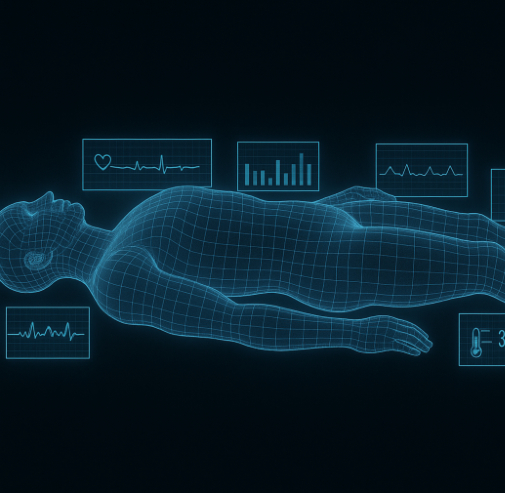
Digital twins emerge in this context. They are the hub of technologies of digital simulation of complex, multi-scale and multi-resolution physical phenomena. They allow a co-construction of the study object by one or more humans.
Read this article from a comprehensive knowledge base, updated and supplemented with articles reviewed by scientific committees.
Read the articleAUTHORS
-
Pierre-Antoine BEAL : General Manager - Cervval
-
Cyril SEPTSEAULT : Director of Simulation Activities - Cervval
-
Matthieu AUBRY : Design engineer - Cervval
-
Lise LORENZATO : Quality Manager - Cervval
-
Pierre-Armand THOMAS : Chairman - Tacthys – Cervval
INTRODUCTION
A complex system is often defined by two main characteristics: the heterogeneity of its structure, and its dynamics. From the modeller's point of view, a complex system will therefore present two difficulties: the variety of models to be used, and their ability to transcribe an evolution that is often non-linear and difficult for the human mind to grasp. Complex systems show the limits of reductionism: knowledge of the behavior of elementary components is not sufficient to predict the behavior of the overall system. Moreover, additional phenomena emerge from collective behavior (self-organization, multistationarity, chaos, bifurcations or feedback loops), making it difficult to observe results and, by extension, to analyze the data produced.
The complex system cannot be described in a monolithic way: the various interacting components have to be identified and distributed over different hierarchical modeling levels. The knowledge on which modeling is based is incomplete, requiring the involvement of different disciplines: multidisciplinary collaboration and co-construction. What's more, to simulate a complex system numerically, it is necessary to be able to separate components from a semantic and execution point of view: this entails particular precautions around data exchange. Last but not least, the representation of results is a major challenge, as it has to adapt both to the multi-disciplinary and multi-dimensional nature of the data, and to the dynamic nature of its evolution.
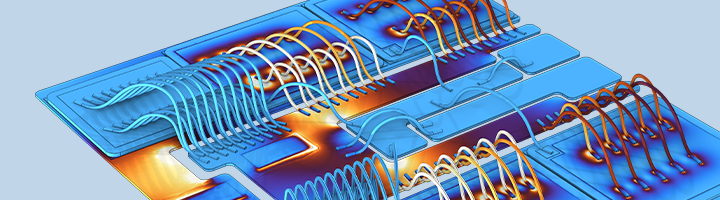
Numerical simulation is now an integral part of industrial processes. It can be applied to the modeling of existing complex systems, but is also of great interest in the design of new systems. In both cases, the result to be obtained is a numerical model that faithfully represents the system. This result can then be used to perform analyses with a view to :
reduce costs and investigation time by using simulation rather than acting on the physical model;
simulate degraded modes of operation, or cases that would be unthinkable in the real world;
carry out analyses of system modifications before deciding to actually implement them.
When a modeler designs a digital simulator, he puts his knowledge and assumptions into it. Since the latter are subjective and contextual, this sets the first limits on the validity of the model and therefore the simulation. Indeed, some theories will be valid under certain conditions, whereas others will have to be changed when these conditions are no longer met. A result may therefore not be valid whatever the conditions. This is what we call the validity domain: there is a bounded space of input parameters for...

Exclusive to subscribers. 97% yet to be discovered!
Already subscribed? Log in!
KEYWORDS
Engineering | decision support system | digital twin | complex system
Digital twins for complex systems modeling
 The digital twin for engineering
Article included in this offer
"Industrial management"
(
72 articles
)
Updated and enriched with articles validated by our scientific committees
A set of exclusive tools to complement the resources
Bibliography
- (1) - LIM (K.Y.H.), ZHENG (P.), CHEN (C.-H.) - A state-of-the-art survey of Digital Twin : techniques, engineering product lifecycle management and business innovation perspectives. - J Intell Manuf 31, 1313-1337 (2020). https://doi.org/10.1007/s10845-019-01512-w ...
Exclusive to subscribers. 97% yet to be discovered!
Already subscribed? Log in!