Microstereolithography of ceramics
Microstereolithography of complex ceramic parts

Add to my library

RE13 V1 Archive

Microstereolithography of ceramics


Microstereolithography of complex ceramic parts

Author : Serge MONNERET

Publication date: February 10, 2004 | Lire en français

Add to my library Add to my library

Logo Techniques de l'Ingenieur You do not have access to this resource.
Request your free trial access! Free trial

Already subscribed?

4. Microstereolithography of ceramics

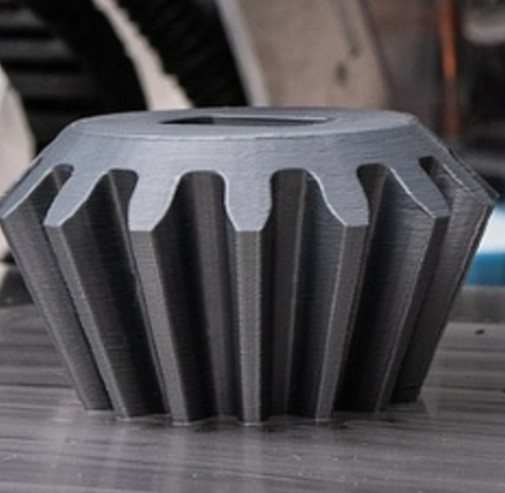
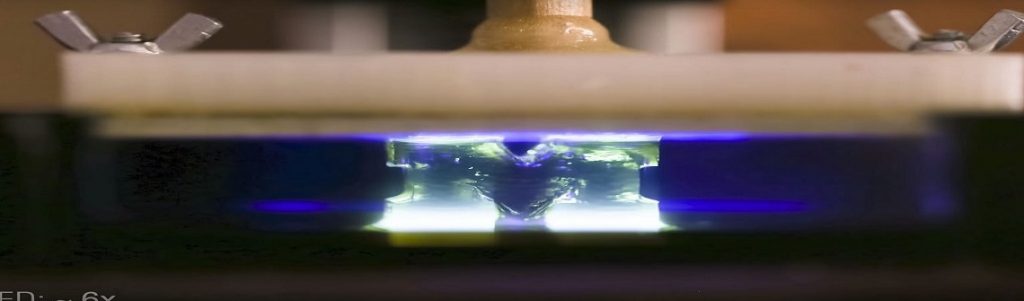
To create complex three-dimensional parts with novel properties (heat resistance, mechanical strength, conductivity, transparency, etc.), we can use stereolithography to shape light-sensitive resins heavily charged with powder of a specific material (ceramic, metal, etc.). The composites thus obtained then undergo two thermal treatments, debinding and sintering, designed to eliminate their polymer component by pyrolysis, and to ensure densification of the residual material.

Such a procedure has already led to the production of complex three-dimensional ceramic and metal objects, on SL machines adapted to the use of pasty materials and operating with a typical layer thickness of 100 µm

You do not have access to this resource.
Logo Techniques de l'Ingenieur

Exclusive to subscribers. 97% yet to be discovered!

You do not have access to this resource. Click here to request your free trial access!

Already subscribed?


Article included in this offer

"Material processing - Assembly"

( 174 articles )

Complete knowledge base

Updated and enriched with articles validated by our scientific committees

Services

A set of exclusive tools to complement the resources

View offer details

Dans les ressources documentaires

Frittage : aspects physico-chimiques - Partie 1 : frittage en phase solide

Cet article est consacré au frittage en phase solide, un des trois types de frittage couramment distingué...

Frittage : aspects physico-chimiques - Partie 2 : frittage en phase liquide

Le frittage en phase liquide utilise les propriétés des liquides pour faciliter la cohésion des grains, c...

Matériaux pour outils de coupe

Inventés au XIX e siècle, les premiers matériaux de coupe ont depuis fait l’objet d’innovation et d’augm...

Matériaux pour outils de coupe - Données numériques en fraisage

Il est très difficile de donner des valeurs numériques relatives à l’emploi d’un outil dans une matière. ...

Tous les livres blancs
Toutes les actualités
Contact us