Supercontinuum fiber laser — Principle and applications

Add to my library

E6452 V1 Article

Supercontinuum fiber laser — Principle and applications

Author : Thibaut SYLVESTRE

Publication date: September 10, 2025 | Lire en français

Add to my library Add to my library

Logo Techniques de l'Ingenieur You do not have access to this resource.
Request your free trial access! Free trial

Already subscribed?

Overview

Read this article from a comprehensive knowledge base, updated and supplemented with articles reviewed by scientific committees.

Read the article

AUTHOR

  • Thibaut SYLVESTRE : CNRS Research Director - FEMTO-ST Institute, Marie and Louis Pasteur University, Besançon, FRANCE

 INTRODUCTION

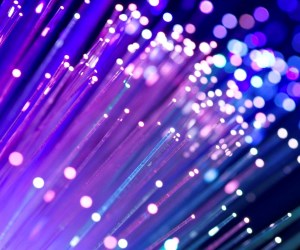
Since the invention of the laser in 1960, one of the major challenges has been to develop efficient methods for converting laser light into new wavelengths. Supercontinuum (SC) generation, first observed in 1970 in bulk materials, and then in 1976 in optical fibers [IN 122] , quickly established itself as an elegant, high-performance solution. By considerably broadening the monochromatic spectrum of lasers, while preserving a spatially coherent, high-power output, this new white light source has revolutionized many fields of application. Supercontinuum sources generate a continuous, ultra-wide electromagnetic spectrum, spanning several octaves in frequency, from the visible to the infrared, while remaining fiber-optically guided. They thus combine the brilliance of a laser with the broad spectral coverage of a lamp, offering great potential for replacing many traditional light sources in optical metrology, spectroscopy and microscopy. Thanks to their versatility, SC lasers are exploited in a variety of fields, including biomedical imaging, optical coherence tomography (OCT) [E 4 155] , materials processing, optical sensing, absorption spectroscopy and optical frequency comb (OFC) metrology. The advantages of supercontinuum light lie not only in its brilliance, which is several orders of magnitude greater than that of blackbody radiation, but also in its remarkable coherence properties. These characteristics enable the use of relatively simple interferometric and heterodyne detection schemes, guaranteeing outstanding performance in a wide range of applications.

The most advanced commercial SC sources are mainly based on microstructured silica optical fibers [RE 43] . They deliver several watts of power across the entire transmission window of silica fibers, from 400 to 2,400 nm. Today, a dozen companies around the world market SC lasers, with notable success. These include LEUKOS in France and NKT Photonics in Denmark. Dedicated mid-infrared (MIR) sources, based on fluoride fibers and offering spectra down to 4 µm, or even 4.8 µm in some cases, are also available.

However, many emerging applications...

You do not have access to this resource.
Logo Techniques de l'Ingenieur

Exclusive to subscribers. 97% yet to be discovered!

You do not have access to this resource. Click here to request your free trial access!

Already subscribed?


Ongoing reading
Supercontinuum fiber laser — Principle and applications

Article included in this offer

"Optics and photonics"

( 204 articles )

Complete knowledge base

Updated and enriched with articles validated by our scientific committees

Services

A set of exclusive tools to complement the resources

View offer details

Contenus associés

Sur le même sujet

Veille personnalisée : Inscrivez-vous !

Dans les ressources documentaires

Cristaux et optique laser non linéaires

Cet article présente la physique de base des cristaux inorganiques à propriétés optiques non linéaires et...

Holographie micro-onde - Principe et applications

L’holographie permet de créer une image tridimensionnelle d’un objet. Inventée à l’origine en optique, ce...

Technologie LiFi (Light Fidelity)

Le LiFi, ou Light-Fidelity, est une technologie issue des télécommunications optiques permettant de trans...

Fibres et guides planaires en verre de chalcogénures pour l’optique infrarouge

L’article dresse un état de l’art sur les verres de chalcogénures. Il traite en particulier des condition...

WhitePaper
4 December 2018
Caméra thermique : FLIRGFx320

Caméra infrarouge pour la détection des gaz à sécurité intrinsèque. Description produit de deux pages

Tous les livres blancs
Article Une LED composée d’une unique molécule
5 June 2014
Une LED composée d’une unique molécule

La course à la miniaturisation a conduit des chercheurs français à fabriquer une LED composée d’une seule molécule. Ces travaux ont été publiés dans Physical Re...

Toutes les actualités
Contact us