Overview
ABSTRACT
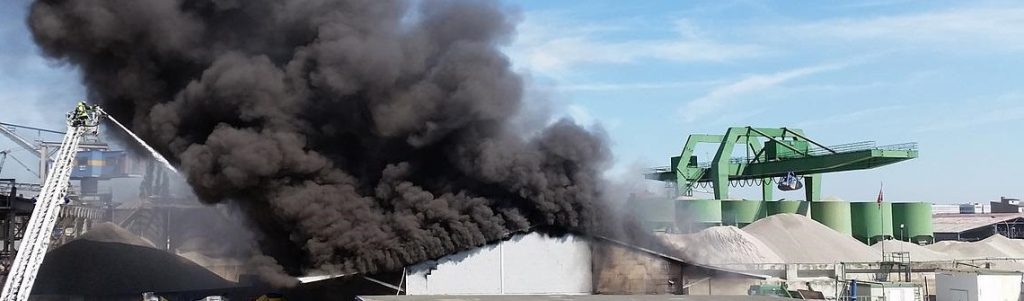
Domino effects resulting in cascading events in the chemical and process industries are well known causes of several accident scenarios.
A domino accident results from an unexpected initiating event which propagates and escalates into one or more larger events with more disastrous consequences that the primary event. This article reports the escalation assessment possibility by comparing the intensity of the escalation vector
of the dangerous phenomenon at the position of a potential target with the limit escalation threshold. Then it describes some qualitative and quantitative methods of the evaluation of the risk of domino effect.
Read this article from a comprehensive knowledge base, updated and supplemented with articles reviewed by scientific committees.
Read the articleAUTHOR
-
André LAURENT : Reaction and Process Engineering Laboratory - University of Lorraine, CNRS, LRGP, ENSIC - 1 rue Grandville BP 20451, 54001 Nancy-Cedex, France
INTRODUCTION
The European directives known as "Seveso II" and "Seveso III", transposed into French law by Decrees 99-1220 of December 28, 1999, 2000-258 of March 20, 2000, 2014-284 and 285 of March 3, 2014, and Orders of May 10, 2000 and May 26, 2014, respectively, have introduced obligations linked to the consideration of the domino effect in the prevention of major accidents involving hazardous substances or preparations present in certain categories of installations classified for environmental protection (ICPE) subject to authorization. The directives therefore impose the need to examine the consequences of an accident on neighboring facilities (concept of domino effect), either through interaction between equipment or facilities within the same establishment, or through interaction between neighboring or nearby establishments. As a result, the contents of the hazard study must contain a good description and approach to possible domino effects.
This article begins with a review of some accidents involving domino effects. The definitions and characteristics of a domino effect are then presented. The notions of escalation vectors and damage threshold vectors are examined. Two practical qualitative methods based on effect distances are described. Finally, a quantitative method for estimating domino effect risks is described step by step.

Exclusive to subscribers. 97% yet to be discovered!
Already subscribed? Log in!
KEYWORDS
domino effect | quantitative risk assessment | escalation | threshold values | vulnerability models | Probit models
Qualitative and quantitative risk assesments caused by domino accidents in industry
 Review of some accidents involving domino effects
Article included in this offer
"Safety and risk management"
(
462 articles
)
Updated and enriched with articles validated by our scientific committees
A set of exclusive tools to complement the resources
Bibliography
Exclusive to subscribers. 97% yet to be discovered!
Already subscribed? Log in!