Overview
Read this article from a comprehensive knowledge base, updated and supplemented with articles reviewed by scientific committees.
Read the articleAUTHOR
-
Jean-Claude BOEGLIN : Chemical engineer, Doctor of Science - Honorary Chairman, Institut de recherches hydrologiques (IRH) Environnement Nancy - Scientific advisor to the Institut de promotion industrielle (IPI) Environnement Industriel Colmar
INTRODUCTION
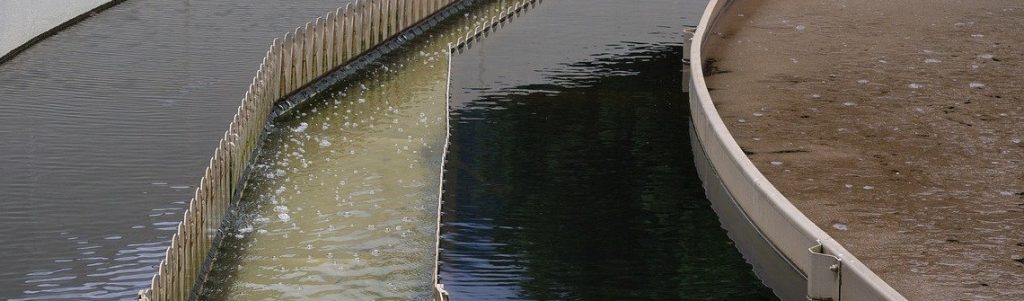
The elimination of organic carbonaceous and nitrogenous pollution (in colloidal form or in solution), when it presents a satisfactory biodegradability, is essentially achieved by biological purification processes. They are the most widely used treatment method for urban wastewater and many industrial wastewaters, due to their efficiency and rusticity.
Commonly referred to as secondary treatment, biological processes are generally implemented in a resi-dual water treatment chain. They are located downstream of pre-treatments that separate dense bulky matter (waste, gravel, sand) from troublesome matter (oil, grease, etc.), and of primary or physico-chemical settling treatments, the purpose of which is to ensure partial or total elimination of particulate pollution and, if necessary, toxic pollution.
It should also be noted that, in some cases, biological purification can be used to refine water quality, as part of a finishing or tertiary treatment that reduces residual carbon and nitrogen pollution.
This article :
a brief review of the fundamental principles of biological purification and, more specifically, of the reaction mechanisms involved in the metabolization of organic matter in aerobic and anaerobic environments;
a description of the various treatment technologies for bacterial degradation of carbon and nitrogen pollution, including sizing criteria, purification performance and industrial applications.

Exclusive to subscribers. 97% yet to be discovered!
Already subscribed? Log in!
Biological treatment of wastewater
 Basic principles of purification
Article included in this offer
"Bioprocesses and bioproductions"
(
154 articles
)
Updated and enriched with articles validated by our scientific committees
A set of exclusive tools to complement the resources
References
Books
Exclusive to subscribers. 97% yet to be discovered!
Already subscribed? Log in!