Overview
ABSTRACT
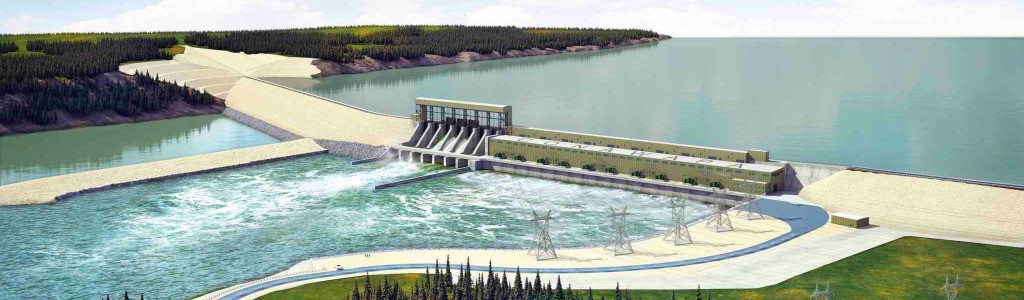
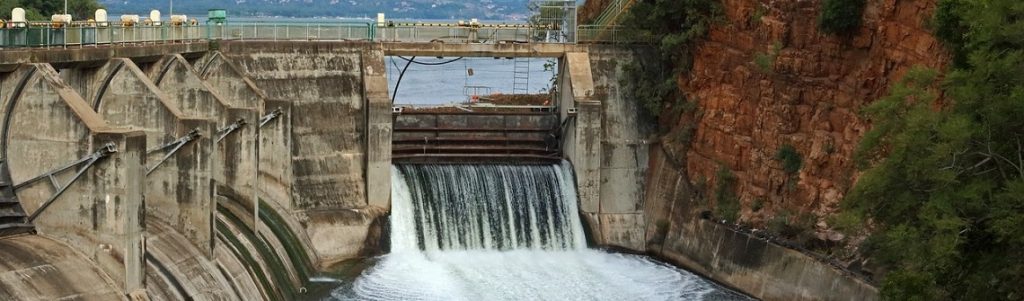
Hydroelectric developments convert in electric energy the potential energy of water appearing in altitude during rainfall. A wide range of such developments exist, from several tens of meter drops with river hydro developments to more than 1,000 meters drops which require penstocks in order to transport the water from a reservoir in altitude to a plant located further down. The developments are also classified according to the volume of water to be stored at the drop point; this volume characterizes the capability of the development to modulate its production according to time and even to store energy. An hydroelectric development generally comprises a dam, canals or tunnels, penstocks, a plant and its extensions. The plant contains the turbines or pumps and the alternators. Certain developments form chains of structures along large rivers. Others form extremely complex systems combining several developments on several valleys or even allow for the use of tidal energy.
Read this article from a comprehensive knowledge base, updated and supplemented with articles reviewed by scientific committees.
Read the articleAUTHOR
-
Pierre-Louis VIOLLET : Senior Vice President, Coordination and Partnerships, EDF R - Honorary Professor at the École Nationale des Ponts et Chaussées - Chairman of the Scientific and Technical Committee of the Société Hydrotechnique de France
INTRODUCTION
The potential energy renewed each year at altitude in inland waters (rivers, snow and glaciers) is estimated worldwide at around 40,000 TWh per year, of which a large third (around 14,000 TWh) is exploitable with currently available techniques. Under the economic conditions prevailing at the beginning of the 21st century, 8,700 TWh are considered to be economically exploitable, compared with other energy sources. A total of 3,000 TWh of hydroelectric power is actually generated every year, representing some 16% of total electricity production worldwide. In Europe, hydroelectric schemes supply 99% of Norway's electricity needs and 12% of France's. In France, the third quarter of the 20th century saw the development of almost all economically exploitable hydroelectric resources. However, on a global scale, there is still an annual hydroelectric resource of around 5,700 TWh that could be profitably developed, especially in Africa, Asia and Latin America. This potential may even be much greater in the future, when primary energy resources will be under greater pressure, fossil fuel prices will be higher, and CO 2 emissions will have to be further limited. What's more, hydropower is a renewable energy source that is not only regular and predictable, but can also be used to adapt production to requirements on an hour-by-hour basis, or to compensate for the intermittency of other renewable energies, provided that sufficient reservoirs are available at altitude. The development of hydroelectric power requires careful consideration of environmental aspects and the safety of people and property. Hydroelectric schemes are sometimes highly complex, incorporating a wide range of techniques.

Exclusive to subscribers. 97% yet to be discovered!
Already subscribed? Log in!
Hydroelectric developments
 Principle of hydroelectric schemes
Article included in this offer
"Energy resources and storage"
(
208 articles
)
Updated and enriched with articles validated by our scientific committees
A set of exclusive tools to complement the resources
Bibliography
Exclusive to subscribers. 97% yet to be discovered!
Already subscribed? Log in!