Overview
ABSTRACT
Tides, waves and maritime currents have true energetic potential. Historically in France, there are two major examples of the use of tidal energy: the Rance Tidal Power Station and the Chausey Islands project. Marine current turbines are another means to exploit the energy of marine currents. Their technology is still at the experimental stage. The most advanced projects principally concern Great-Britain.
Read this article from a comprehensive knowledge base, updated and supplemented with articles reviewed by scientific committees.
Read the articleAUTHOR
-
René BONNEFILLE : Consulting engineer – Doctor of Science - Engineer from the École nationale supérieure d'électrotechnique et d'hydraulique de Toulouse (France) - Former professor of maritime hydraulics at the École nationale supérieure des techniques avancées and the École nationale des ponts et chaussées
INTRODUCTION
Let's compare the different sources of energy available to mankind around the globe. Essentially, there are two sources that seem different, but which in reality have the same origin, the constitution of matter:
on the one hand, physical energies: gravity, linked to the configuration of the solar system, and hydraulic and wind energies, which do not destroy matter;
secondly, chemical energies: thermal and nuclear energies that destroy matter.
Throughout history, mankind has used the chemical energy of fire, creating heat by oxidizing matter; later, it used wind and water power, generated by the movement of fluids on the Earth's surface. Tides, waves and ocean currents are another real source of energy.
In particular, tidal energy is due to the sum of two forms of energy:
firstly, gravity, which governs the relative positions and interactions of the stars (in this case the Sun, Earth and Moon) and generates the tides;
secondly, the chemical energy of the Earth's interior, which, through continental drift, shapes the non-perennial contours of the seas and oceans, whether or not they are conducive to the creation of strong tidal currents and/or strong marine currents.
Tidal energy can be converted into mechanical or electrical energy:
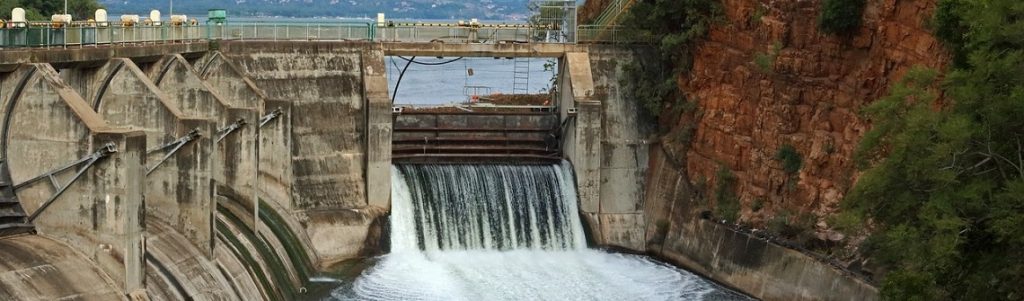
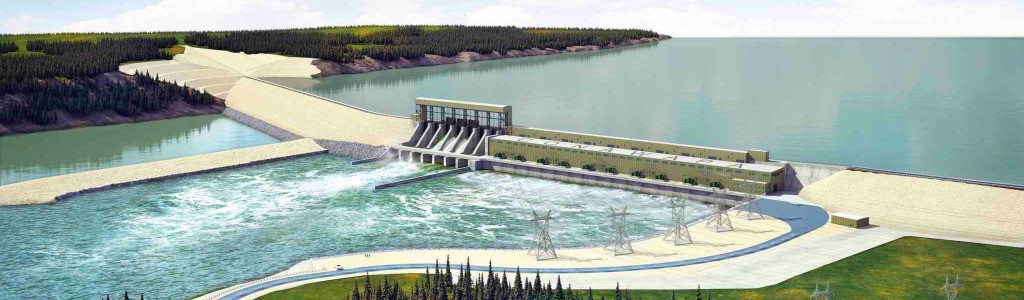
or, from the potential energy of the head of water, due to the tidal range. This process consists of transforming the potential energy generated by tidal variations in sea level into electrical energy using conventional turbines, as is done at the Rance tidal power plant;
or from the kinetic energy of tidal currents. This involves harnessing the kinetic energy of tidal currents, by submerging turbine-generator units called "hydroliennes", by analogy with "wind turbines", as is planned for the Île de Bréhat hydrolienne project . The advantage over wind turbines is that tidal currents are by nature "deterministic", whereas wind speeds are "random".
The production of energy from tidal power can be programmed, without atmospheric or climatic hazards, since the rhythm of the tides can be known on a geological timescale. The only hazards are seismic, which is very rare in Brittany, and terrorist. It should be added that, at the time tidal power was developed in France, Brittany had a poor supply of electricity,...

Exclusive to subscribers. 97% yet to be discovered!
Already subscribed? Log in!
KEYWORDS
state of art | |
Tidal and current energies in France
 Notions about tidal energy
Article included in this offer
"Energy resources and storage"
(
208 articles
)
Updated and enriched with articles validated by our scientific committees
A set of exclusive tools to complement the resources
Bibliography
Exclusive to subscribers. 97% yet to be discovered!
Already subscribed? Log in!