Overview
ABSTRACT
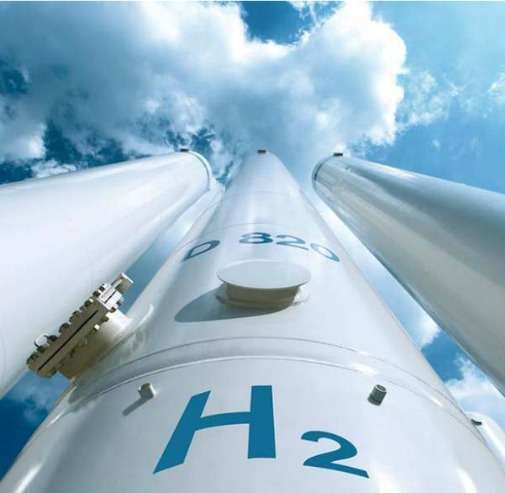
Hydrogen is a zero greenhouse gas emission fuel. It can be produced by dissociating water by electrolysis or by high-temperature thermochemistry. Other possibilities exist from hydrocarbons, alcohols or biomass: reforming, partial oxidation and gasification. The CO2 emitted by these methods can be captured and stored. The hydrogen produced by the dissociation of water is "green" if the energy used is renewable; it then becomes an auxiliary of this type of energy that it allows for storing.
Read this article from a comprehensive knowledge base, updated and supplemented with articles reviewed by scientific committees.
Read the articleAUTHORS
-
Moussa DICKO : Senior Lecturer, Université Paris 13 Sorbonne Paris Cité - Process and Materials Sciences Laboratory (LSPM, CNRS UPR 3407) - Doctor of Mines Paris Tech - ENSIACET engineer
-
Farida DARKRIM-LAMARI : CNRS Research Associate - Process and Materials Sciences Laboratory (LSPM, CNRS UPR 3407) - Doctor Université Paris 13 Sorbonne Paris Cité
-
Pierre MALBRUNOT : Scientific advisor to the French Hydrogen and Fuel Cell Association (AFHYPAC) - This article is an updated reprint of the 2006 article [BE 8 565] by Farida DARKRIN-LAMARI and Pierre MALBRUNOT.
INTRODUCTION
In the 19th century, the advent of the steam engine led to a remarkable expansion of transport and industry. This steam, capable of directly supplying mechanical energy but which does not exist as such in nature – has to be produced by heating water – was, in a way, the first energy vector. Then, at the end of the same century, everything accelerated again with the advent of the internal combustion engine and electricity. The former made it possible to obtain mechanical energy from liquid fuels derived from naturally occurring petroleum. The latter, based on the properties of the constituents of matter, was a new energy vector with almost infinite possibilities, whose most advanced and promising extensions we are now familiar with through electronics and its applications. In the twentieth century, there was no human activity that was not revolutionized by the impact of these two technical revolutions. The world entered the "industrial age" and the "civilization of the automobile", both of which were responsible for profound economic and social transformations. But to fuel the extraordinary development that followed, we needed – and still need – more and more energy, which is why our planet's resources have been exploited without limit: coal, oil, natural gas, hydropower and energy from the fission of nuclear fuels. Today, we can measure the consequences of this excess: the risk of depleting fossil resources, the accumulation of nuclear waste, air pollution threatening public health and the additional greenhouse effect contributing to global warming. And yet, this energy-hungry trend continues, fuelling permanent growth that goes hand in hand with the emergence of developing countries and the increase in the world's population. It is thus foreseeable that, compared with 1970, energy requirements will double by 2020 and triple by 2050. To resolve this contradiction between the growing need for energy, the depletion of fossil fuels, the additional greenhouse effect and pollution, several solutions are possible at the same time:
reduce energy consumption through "rational use" actions;
reduce pollution and greenhouse gas emissions by using more appropriate fuels;
pursue the use of nuclear energy, hoping one day to achieve fusion, which at present is a scientific gamble;
use so-called renewable energies: wind, solar, hydraulic, biomass, geothermal ;
use hydrogen, a clean, storable energy source.
Hydrogen is a non-toxic, high-energy gas. It can produce heat by direct combustion, with water as a by-product, but it can also produce electricity and heat in fuel cells, again with water as a by-product. Until...

Exclusive to subscribers. 97% yet to be discovered!
Already subscribed? Log in!
KEYWORDS
reforming | electolysis | renewable energies | Environment | energetics
EDITIONS
Other editions of this article are available:
Combustible hydrogène
 Exploited or directly exploitable channels
Article included in this offer
"Vehicules and mobility"
(
91 articles
)
Updated and enriched with articles validated by our scientific committees
A set of exclusive tools to complement the resources
Bibliography
Exclusive to subscribers. 97% yet to be discovered!
Already subscribed? Log in!