Action Spectroscopy: Toward a Structural Probe for Ions in the Gas Phase
Laser-assisted dissociation: structural analysis of biomolecules

Add to my library

RE107 V1 Article

Action Spectroscopy: Toward a Structural Probe for Ions in the Gas Phase


Laser-assisted dissociation: structural analysis of biomolecules

Authors : Rodolphe ANTOINE, Philippe DUGOURD

Publication date: September 10, 2008 | Lire en français

Add to my library Add to my library

Logo Techniques de l'Ingenieur You do not have access to this resource.
Request your free trial access! Free trial

Already subscribed?

5. Action Spectroscopy: Toward a Structural Probe for Ions in the Gas Phase

5.1 Principle of action spectroscopy

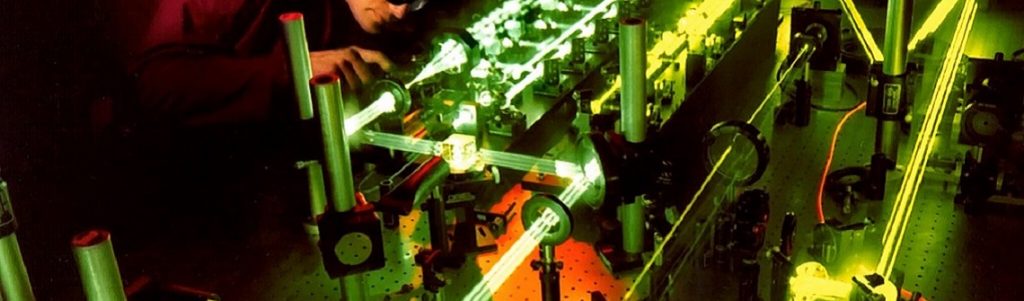
The density of ions in the trap makes it impossible to perform optical absorption spectroscopy (measuring the extinction of the laser beam due to interaction with the ions in the trap). It is necessary to perform action spectroscopy: the effect of the laser on the ions is measured by mass spectrometry as a function of the laser’s wavelength. An action spectrum can be obtained by:

  • photodissociation spectroscopy;

  • electron photodetachment spectroscopy.

Photodissociation spectroscopy involves measuring the dissociation rate of an ion as a function of wavelength:

You do not have access to this resource.
Logo Techniques de l'Ingenieur

Exclusive to subscribers. 97% yet to be discovered!

You do not have access to this resource. Click here to request your free trial access!

Already subscribed?


Ongoing reading
Action Spectroscopy: Toward a Structural Probe for Ions in the Gas Phase

Article included in this offer

"Bioprocesses and bioproductions"

( 154 articles )

Complete knowledge base

Updated and enriched with articles validated by our scientific committees

Services

A set of exclusive tools to complement the resources

View offer details

Contenus associés

Sur le même sujet

Veille personnalisée : Inscrivez-vous !

Dans les ressources documentaires

Techniques d'observation des acides nucléiques et des complexes nucléoprotéiques par AFM

L'expérimentateur qui souhaite observer des biomolécules peut choisir parmi plusieurs systèmes d’imagerie...

Analyse fonctionnelle par colorimétrie et fluorimétrie

Les réactions colorées ne sont plus à ce jour réservées à l’identification des molécules organiques. En e...

Spectroscopie de plasma induit par laser (LIBS) pour le diagnostic chimique et biologique

Dans la perspective de l'analyse chimique et du diagnostic, le laser constitue un outil privilégié, perme...

Tous les livres blancs
Toutes les actualités
Contact us