Overview
ABSTRACT
A porous medium refers to a complex solid with cavities called pores. A large variety of physico-chemical and transport phenomena occur in porous media. The study of such phenomena requires the knowledge of the storage properties of fluids as well as transfer and mechanical properties. Heat transfers in porous media are often complex. After having presented the essential notions concerning the characterization of porous media this article provides a synthesis and an initiation to more specialized literature.
Read this article from a comprehensive knowledge base, updated and supplemented with articles reviewed by scientific committees.
Read the articleAUTHORS
-
Abdelkader MOJTABI : Professor, Université Paul Sabatier Institut de mécanique des fluides de Toulouse (IMFT), Université de Toulouse, CNRS, Toulouse (France)
-
Marc PRAT : Dr CNRS Institut de mécanique des fluides de Toulouse (IMFT), Université de Toulouse, CNRS, Toulouse (France)
-
Michel QUINTARD : Dr CNRS Institut de mécanique des fluides de Toulouse (IMFT), Université de Toulouse, CNRS, Toulouse (France)
-
Jean TAINE : Professor CentraleSupélec, Université Paris-Saclay Lab. EM2C, UPR 288 du CNRS Bât. Eiffel, rue Joliot Curie, 91192 Gif-sur-Yvette Cedex (France)
INTRODUCTION
A porous medium is a complex-shaped solid containing cavities called pores. These cavities can communicate with each other and contain one or more fluid phases that can flow and, if necessary, exchange matter and/or energy with each other and/or with the solid. The solid part, also known as the porous matrix, may be deformable but must have a certain cohesion, which excludes from our definition fluidized beds made up of solid particles held in suspension under the effect of an interstitial fluid flow.
Numerous examples of porous media can be found in everyday life: textiles, leather, paper, fabrics, building materials, insulation, soil and rock formations, filters, heat exchanger coatings, dehydrated food and vegetables, biological fabrics, nuclear reactors, chemical engineering columns and more.
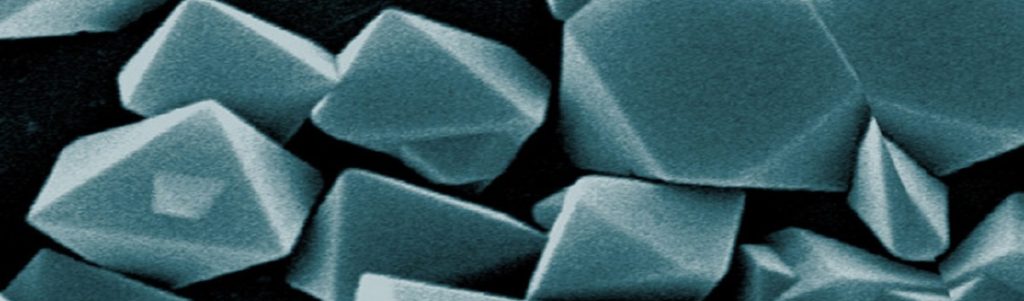
Porous media are extremely varied, in terms of structure (shape and size of matrix grains and pores, figure 1 ), nature (physico-chemical properties of constituent materials) and spatial scale (from tens of cubic kilometers for hydrocarbon deposits and groundwater to a few cubic millimeters for certain types of filter membrane), and play an important role in many industrial sectors and natural phenomena. Typical examples include: petroleum engineering, chemical engineering and electrochemistry, hydrogeology, geothermal engineering, thermal engineering, civil engineering, medicine, biochemistry, nuclear engineering...

Exclusive to subscribers. 97% yet to be discovered!
Already subscribed? Log in!
KEYWORDS
Thermal flow | porosity
EDITIONS
Other editions of this article are available:
Heat transfer in porous media
 Classification and characterization of porous media
Article included in this offer
"Physics of energy"
(
72 articles
)
Updated and enriched with articles validated by our scientific committees
A set of exclusive tools to complement the resources
Bibliography
Exclusive to subscribers. 97% yet to be discovered!
Already subscribed? Log in!