Overview
Read this article from a comprehensive knowledge base, updated and supplemented with articles reviewed by scientific committees.
Read the articleAUTHORS
-
François COSTA : Associate Professor of Electrical Engineering - Doctorate in physical sciences from Orsay Paris-Sud University - Lecturer at the École normale supérieure de Cachan
-
Gérard ROJAT : Doctorate from the Université Paul-Sabatier (Toulouse) - Doctorate in physical sciences from Claude-Bernard University (Lyon) - Professor at Lyon-I University
INTRODUCTION
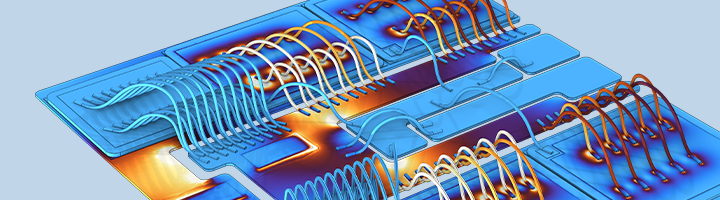
This article describes the principles involved in reducing electromagnetic disturbance in static converters, and introduces simulation methods. T aking EMC into account in the design of a static converter has become a more or less well-established reality. It requires the designer to be multi-disciplined, both in the field of static conversion (knowledge of techniques for increasing efficiency, static and dynamic performance, compactness) and in the field of EMC (knowledge of phenomena, optimization of waveforms, minimization of coupling, compliance with standards, electromagnetic susceptibility), as well as the metrology (high frequency and high current) associated with these fields.
Simulation tools are currently only partially able to deal with the EMC of static converters. The software used is of the "circuit" type for conducted disturbances and specific for radiated disturbances. An emerging trend is the appearance of software for calculating parasitic wiring elements or radiated phenomena. However, if they are to become genuine CAD (Computer-Aided Design) tools, such software still suffers from limitations in terms of available models, functionalities and calculation times. Last but not least, they are not yet fully integrated, as is the case for low-current electronics CAD. However, with rapid improvements and increasing computing power, power electronics CAD software integrating all EMC aspects will soon be a reality.
After having explained the phenomena of disturbance generation and transmission in static converters in the article EMC: sources of disturbance, couplings, SEM

Exclusive to subscribers. 97% yet to be discovered!
Already subscribed? Log in!
EMC in power electronics - Disturbance reduction, simulation
 Principles for reducing disturbances in static converters
Article included in this offer
"Conversion of electrical energy"
(
278 articles
)
Updated and enriched with articles validated by our scientific committees
A set of exclusive tools to complement the resources
References
Exclusive to subscribers. 97% yet to be discovered!
Already subscribed? Log in!