Overview
Read this article from a comprehensive knowledge base, updated and supplemented with articles reviewed by scientific committees.
Read the articleAUTHOR
-
Pierre LAVY : Engineer from the École nationale supérieure d'ingénieurs électriciens de Grenoble (IEG) - Former Technical Director, Hydraulics, EDF
INTRODUCTION
Along with electricity from fuel-fired and then nuclear power plants, hydropower has provided industry and private individuals with the energy they need for their development. In developed countries, almost all profitable hydraulic resources are now equipped, and as demand increases, hydroelectricity is losing its primacy, except in the Nordic countries. On the other hand, large reserves are being developed in developing and Asian countries.
Until the end of the 20th century, power systems in developed countries were closely tied to national organizations. But the liberation of the organization leading to the opening up of electricity markets led to changes in the criteria for investment in hydropower (see the article "The electricity sector: from monopoly to competition").
Hydropower's ability to constantly balance production and consumption is a key factor in its long-term viability:
clean, renewable energy;
zero fuel costs and domestic energy ;
excellent year-round availability (~ 90%);
reliable response to requests (~ 99%);
very short response times (from stop to full power in just a few minutes).
The increase in global energy consumption in developed countries, and its consequences on environmental deterioration, has led to a rethink of the development of renewable energies, with hydropower remaining by far the most important in terms of production. The main purpose of large reservoirs used to be to provide a supply of electricity, but now they are increasingly being used for multiple purposes: irrigation, low-water support, flood control, industrial or drinking water supply, tourism, etc.
Studies must specify the necessary investment costs, their phasing, operating costs and the assets contributed by capitalized production. They must determine the best investment to use the hydraulic deposit and limit environmental impacts.
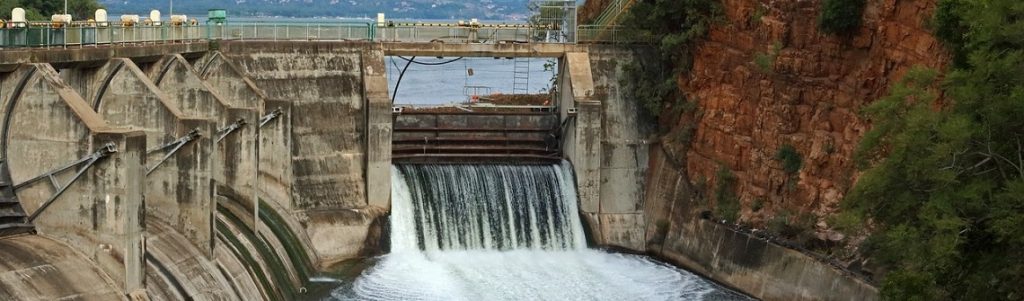
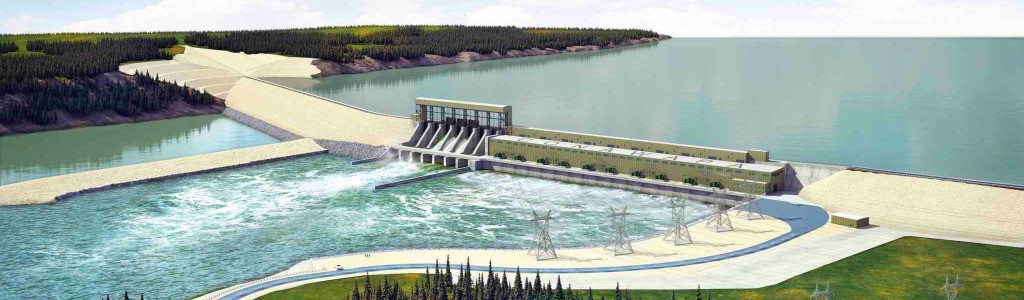
A hydropower scheme comprises a dam creating a reservoir of varying size, a water intake from the reservoir, intake structures, a generating plant, a return to the watercourse, a power transmission line and site access.
Readers are invited to consult the following articles:
on the assessment of natural hazards
[C 3 295] on dams
[C 5 555] on hydroelectric...

Exclusive to subscribers. 97% yet to be discovered!
Already subscribed? Log in!
Hydropower generation
 Natural resources
Article included in this offer
"Electricity networks and applications"
(
186 articles
)
Updated and enriched with articles validated by our scientific committees
A set of exclusive tools to complement the resources
Economic data
In 2000, 18% of the world's electricity was generated by hydropower. The breakdown of installed hydropower capacity is shown in figure 1 .
In France, 15% of the electricity generated (70 TWh) is hydroelectric. This makes France the leading producer of hydroelectricity in the European Union....
Exclusive to subscribers. 97% yet to be discovered!
Already subscribed? Log in!