Overview
ABSTRACT
Microencapsulation encompasses all technologies leading to individualized particles consisting of a coating material and an active material of a size between 1µm and 1000µm. The choice of the process depends on the desired particle structure (microcapsule or microsphere), the properties of the encapsulated molecule, the type of material used and the desired application. The interest of microencapsulation lies in its capacity to protect the active material, improve its presentation or master its release profile.
Read this article from a comprehensive knowledge base, updated and supplemented with articles reviewed by scientific committees.
Read the articleAUTHORS
-
Jean-Pierre BENOÎT : Professor at Angers Faculty of Pharmacy
-
Joël RICHARD : Vice President, Peptides, IPSEN - Former student at the École normale supérieure de Cachan - Doctor of Materials Science - Qualified to direct research in chemistry
-
Marie-Claire VENIER-JULIENNE : Professor at Angers Faculty of Pharmacy
INTRODUCTION
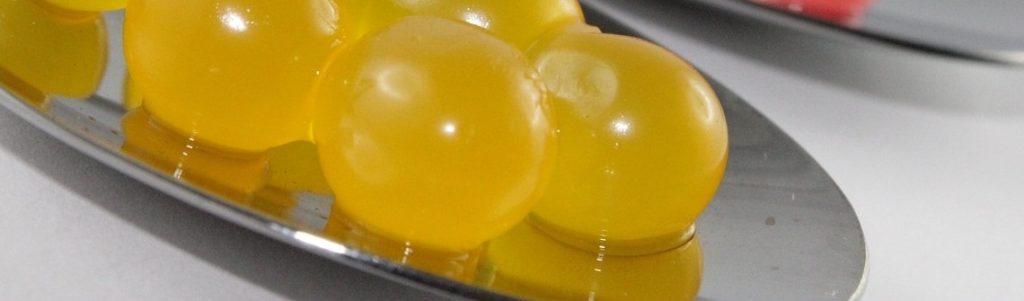
Microencapsulation brings together all the technologies used to prepare individualized microparticles, consisting of a coating material containing an active ingredient.
Microparticles are between 1 μm and 1 mm in size, and typically contain between 5 and 90% (by mass) of active ingredient. Active ingredients come from a wide variety of sources: active pharmaceutical ingredients, active cosmetic ingredients, food additives, phytosanitary products, perfume essences, micro-organisms, cells, or even chemical reaction catalysts... The coating materials are polymers of natural or synthetic origin, or lipids. The resulting microparticles have two types of morphology:
or a microcapsule, i.e. a reservoir particle comprising a core of liquid (more or less viscous) or solid active ingredient, surrounded by a continuous solid membrane of coating material;
or a microsphere, i.e. a particle made up of a continuous macromolecular or lipid network forming a matrix in which the active ingredient is finely dispersed, in the form of molecules, fine solid particles or solution droplets.
From an industrial standpoint, microencapsulation is used to meet the following objectives:
ensure the protection, compatibility and stabilization of an active ingredient in a formulation;
create a suitable layout ;
improve product presentation ;
masking a taste or smell ;
modify and control the release profile of an active ingredient to obtain, for example, a prolonged or triggered effect.
This article does not cover molecular encapsulation (cyclodextrins, etc.), soft phases (micelles, liposomes, spherulites, microemulsions, emulsions, etc.) or nanotechnologies.

Exclusive to subscribers. 97% yet to be discovered!
Already subscribed? Log in!
KEYWORDS
implementation | state of art | microparticles | principle
Microencapsulation
 Choice of process and formulation
Article included in this offer
"Formulation"
(
107 articles
)
Updated and enriched with articles validated by our scientific committees
A set of exclusive tools to complement the resources
Bibliography
Exclusive to subscribers. 97% yet to be discovered!
Already subscribed? Log in!