Overview
ABSTRACT
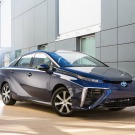
The fuel cell is an electrochemical device that converts chemical energy into electrical energy. It converts hydrogen, combined with oxygen from the air, into water, electricity and heat. The main obstacles to the development of electric vehicles are usually low autonomy and too-long recharge. With storage of hydrogen in compressed form at 350 or 700 bar, fuel cell vehicles usually reach 500 km or more of autonomy, with a refueling time of about 3– 5 minutes. Although cost reductions remain to be achieved, fuel cell vehicles appear more than ever as credible alternatives to existing vehicles.
Read this article from a comprehensive knowledge base, updated and supplemented with articles reviewed by scientific committees.
Read the articleAUTHOR
-
Jean-Philippe POIROT-CROUVEZIER : Research engineer - CEA-LITEN, Electrochemical Generator Integration Department, Grenoble, France
INTRODUCTION
Like a battery, a fuel cell is a converter of chemical energy into electrical energy. The electrochemical reactions associated with electricity generation take place in electrodes, themselves separated by an electrolyte. In the case of batteries, the reagents used are initially present in the electrodes and are consumed and then regenerated as they are discharged and charged, whereas in the case of fuel cells, they are supplied as they are consumed. As a result, the functions of energy storage and power generation are dissociated, with storage dependent solely on the size of the fuel tank on the one hand, and power linked primarily to the size of the cell on the other.
Thanks to this dissociation of functions, the energy density of fuel cell systems can be increased to a higher level than that of batteries. The energy density of current batteries, even for Li/ion technologies, remains a limiting factor in the development of battery-powered electric vehicles, as does the time required for recharging. On the other hand, in recent years, fuel cell vehicle prototypes developed by several manufacturers have demonstrated the possibility of producing electric vehicles that can be recharged rapidly, with performance and range similar to that of today's combustion-powered vehicles. In most cases, these vehicles also contain a battery, making these storage technologies complementary rather than competitive.
For a general overview of fuel cells, please refer to

Exclusive to subscribers. 97% yet to be discovered!
Already subscribed? Log in!
KEYWORDS
efficiency | fuel cell | system analysis | hydrogen storage
Electrified Road Transport - Fuel Cell Vehicles
 The basics
Article included in this offer
"Vehicules and mobility"
(
91 articles
)
Updated and enriched with articles validated by our scientific committees
A set of exclusive tools to complement the resources
Bibliography
Exclusive to subscribers. 97% yet to be discovered!
Already subscribed? Log in!