Overview
Read this article from a comprehensive knowledge base, updated and supplemented with articles reviewed by scientific committees.
Read the articleAUTHOR
-
Michel FRANCOIS : Engineer from the Conservatoire National des Arts et Métiers - Member of AFGC (Association Française des Gaz Comprimés), Paris, France
INTRODUCTION
Transportable pressure equipment has been used to transport industrial and medical gases since the late 19th century.
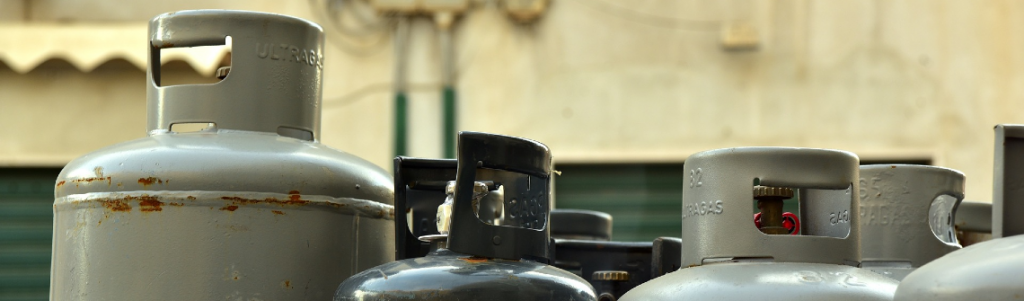
This transportable pressure equipment, whose main containers are commonly referred to as "gas cylinders", could have presented a non-negligible risk potential, given their widespread use in industry and the public sector, the energy stored and the characteristics of certain gases.
However, the operation and handling of a gas cylinder represents an obvious hazard, and regulatory authorities have long been legislating the construction and use of these cylinders. As early as 1890, several European countries meeting in Berne adopted a set of regulations known as the "Berne Convention", laying down the conditions for transporting dangerous goods. This was the origin of the RID regulation for rail, and later the ADR agreement for road, which set out the rules for the design and use of receptacles and tanks. Following on from these, French regulations, in the form of the decree of January 18, 1943 and its amending or supplementary texts, set out the special rules to which equipment is subject. At European level, Directive 2008/68/EU has taken over ADR and RID.
The need for standardization soon became apparent in the field of transportable pressure equipment, and standardization, which supports and supplements regulations, became an increasingly important tool for ensuring quality and safety. Until the late 1980s, the main purpose of standardization was to supplement regulations by formalizing the rules of the art, with the essential aim of ensuring quality. This was still the case when European directives 84/525/EEC, 84/526/EEC and 84/527/EEC were published, the latter containing all the detailed safety requirements and spelling out all the design and testing procedures for equipment to be marketed in Europe.
In May 1985, the Council of Ministers of the European Communities, in adopting the resolution on the "new approach" and instituting "reference to standards in technical regulations", gave paramount importance to standards. As a result, new directives such as 2010/35/EU "Transportable Pressure Equipment" (TPED or DESPT), published in 2010 and replacing Directive 99/36/EC, now define only essential safety requirements and refer to European standards, which become the real tool for harmonizing regulations in Europe. The implementation of the new TPED, which supplements Directive 2008/68/EC, should enhance the safety of transportable pressure equipment approved for the carriage of goods, and facilitate the free movement of such equipment within Europe.
The United Nations (UN) Committee of Experts on the Transport of Dangerous Goods, which meets twice a year in Geneva, has drawn...

Exclusive to subscribers. 97% yet to be discovered!
Already subscribed? Log in!
KEYWORDS
transportable pressure equipment | transportable pressure vessel | tank | cylinder | decreeTMD | ADR
Regulation and standardisation of transportable pressure equipment
 Regulations
Article included in this offer
"Hydraulic, aerodynamic and thermal machines"
(
181 articles
)
Updated and enriched with articles validated by our scientific committees
A set of exclusive tools to complement the resources
Bibliography
- - http://www.afgc.fr – AFGC, Association française des gaz comprimés, membre de l'EIGA. http://www.francegazliquides.fr – FRANCE GAZ LIQUIDES, Association filière...
Exclusive to subscribers. 97% yet to be discovered!
Already subscribed? Log in!