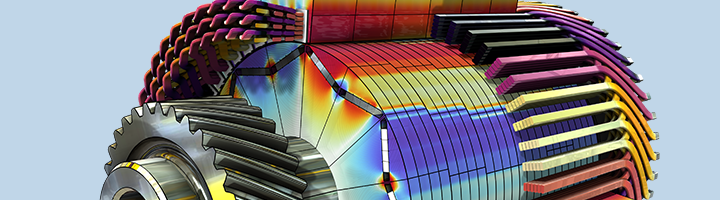
Overview
Read this article from a comprehensive knowledge base, updated and supplemented with articles reviewed by scientific committees.
Read the articleAUTHORS
-
Jean-Jacques BARRAU : Professor at Université Paul-Sabatier-Toulouse-III
-
Michel SUDRE : Associate Professor, Université Paul-Sabatier-Toulouse-III
INTRODUCTION
The aim of this article is to provide a basic understanding of the finite element method, so as to be able to use existing software effectively for structural calculations in the linear domain. Readers wishing to deepen their theoretical knowledge on this subject can refer to the documents given as references.
Throughout this article, the main assumption is that the structure's behavior is linear: displacements at all points are proportional to external forces. This assumes that the material has linear behavior (elasticity) and that deformations are proportional to displacements (small displacements).

Exclusive to subscribers. 97% yet to be discovered!
Already subscribed? Log in!
Finite element modeling of structures
 Method presentation
Article included in this offer
"Mechanical functions and components"
(
212 articles
)
Updated and enriched with articles validated by our scientific committees
A set of exclusive tools to complement the resources
References
Exclusive to subscribers. 97% yet to be discovered!
Already subscribed? Log in!