Overview
ABSTRACT
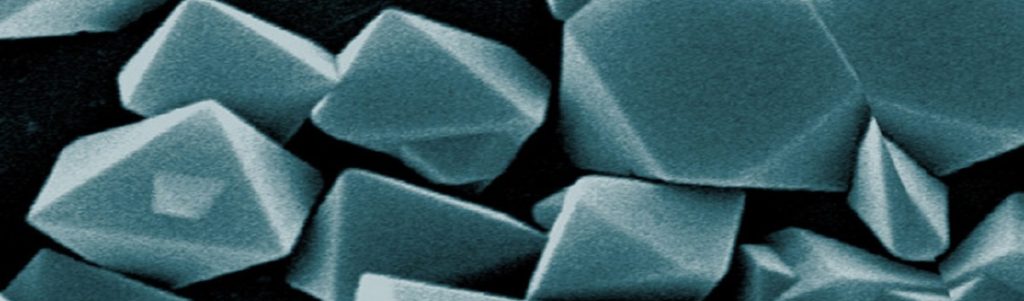
Lyophobic nanoporous systems, which can be implemented as hydraulic accumulators, behave like antisponges. This article presents the nanoporous materials used as anti-sponges. It more broadly describes the working principle of lyophobic nanoporous systems and their underlying physics. The article also compares lyophobic nanoporous systems with current energy storage solutions to show their strengths and weaknesses. Perspectives for future improvements are also given.
Read this article from a comprehensive knowledge base, updated and supplemented with articles reviewed by scientific committees.
Read the articleAUTHOR
-
Cyril PICARD : Senior lecturer at Grenoble-Alpes University - Interdisciplinary Physics Laboratory, Grenoble, France
INTRODUCTION
The development of new nanoporous materials with large specific surface areas has opened up new energy storage possibilities. The adsorption of gases within nanoporous materials opens up new prospects both for the storage of chemical energy, through the reversible fixation of a species such as hydrogen, and for the storage of thermal energy associated with the heat of exothermic adsorption and endothermic desorption. In this context, lyophobic nanoporous systems take advantage of nanoporous materials for mechanical energy storage. Energy is stored by forced intrusion of a non-wetting liquid into a nanoporous material and released by spontaneous expulsion of the pressurized liquid from the pores. This original approach enables hydraulic energy to be converted directly and reversibly into interfacial energy. The pressure is fixed by the liquid/nanoporous couple employed, and is largely independent of both the rate of matrix filling with liquid and the duration of intrusion or extrusion. These systems thus enable rapid energy transfer with a power density more than an order of magnitude greater than that of current storage solutions.
After clarifying the operating principle of lyophobic nanoporous systems, the characteristics of the nanoporous materials used to produce them will be detailed. The article then presents the potential of these new systems for energy storage and conversion, placing them in the context of the energy storage solutions available today. The physical mechanisms at work within nanopores, which are responsible for the specific behavior of lyophobic nanoporous systems, are then discussed. The article concludes with an overview of the challenges ahead for the development of these systems.
Field: Energy storage and conversion technology
Degree of technology diffusion: Emergence
Technology involved : Hydraulic systems technology
Applications: Actuators, high-power-density energy storage, braking energy recovery
Main French players: Université Blaise Pascal, Université Grenoble-Alpes, Université de Haute-Alsace.
Other international players: National University of Ukraine, Fukuoka Institute of Technology, University of California San Diego
Contact: [email protected]

Exclusive to subscribers. 97% yet to be discovered!
Already subscribed? Log in!
KEYWORDS
energy | nanoporous | hydrophobic | confined liquid
Lyophobic nanoporous accumulator
 Background and challenges
Article included in this offer
"Nanosciences and nanotechnologies"
(
137 articles
)
Updated and enriched with articles validated by our scientific committees
A set of exclusive tools to complement the resources
Bibliography
Exclusive to subscribers. 97% yet to be discovered!
Already subscribed? Log in!