Overview
ABSTRACT
The simultaneous perception of visual and auditory data only rarely lead to a juxtaposition of information. The various modalities of integration of images associated with sounds range from fusion to occlusion and include various intermediary stages. Fusion processes play an essential part in spatial perception. They require the respect of the temporal and spatial coherences of signals as well as the convergence of movements. They depend on the quality and respective dimensions of the image and sound.
Read this article from a comprehensive knowledge base, updated and supplemented with articles reviewed by scientific committees.
Read the articleAUTHOR
-
Jacques Jouhaneau : Former holder of the CNAM Chair in Acoustics
INTRODUCTION
The dossier on spatial perception, immersion and virtual reality includes three articles dealing successively with :
image-induced perception of space or visual perception of space
[TE 5 182] sound-induced perception of space or auditory perception of space
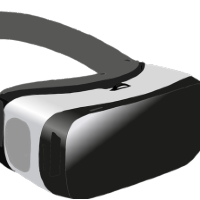
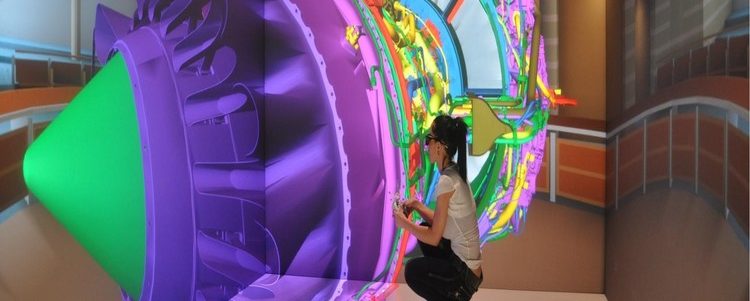
[TE 5 183] perception of space, immersion and virtual reality, the subject of this article, which deals with the simultaneous perception of visual and auditory data relating to space. Contrary to what one might think, this dual perception rarely gives rise to a juxtaposition of information.
The different ways of integrating images associated with sounds can range from fusion (convergence) to occlusion (a single perceived signal), passing through several intermediate stages, including dissociation (two distinct signals) and summation (virtual objects, delayed fusion, pseudo-convergence...).
Fusion processes play an essential role in the perception of space. They involve respecting the temporal and spatial coherence of signals, as well as the convergence of movements and displacements. They depend on the quality and respective dimensions of the image and sound.
The immersion resulting from the convergence of visual and auditory information is a sensation that integrates two components: a sensory component (psychophysical) and a mental component (psychological).
Cinematic immersion is a very good model of these perceptual modalities. It depends largely on the nature of the sound elements. Each component of the "soundtrack" - voice, sound effects and music - induces its own modes of integration.
The examples given in this article highlight several forms of immersion. In addition to its sensory or mental, frontal or spatial components, we are led to extend its definition to the integration of "frequency space" and the perception of time.
The combined action of the three forms of immersion - spatial, spectral and temporal - provides a clearer picture of the impact of the expected developments in virtual reality,...

Exclusive to subscribers. 97% yet to be discovered!
Already subscribed? Log in!
KEYWORDS
immersion | sound perception | audiovisual | audiovisual & multimedia | sound recording | sound system | acoustic | psychophysics | electroacoustic
Spatial perception and immersion - Audiovisual perception and virtual reality
 Processing two simultaneous pieces of spatial information
Article included in this offer
"Signal processing and its applications"
(
151 articles
)
Updated and enriched with articles validated by our scientific committees
A set of exclusive tools to complement the resources
Bibliography
Exclusive to subscribers. 97% yet to be discovered!
Already subscribed? Log in!