Overview
ABSTRACT
Fusion welding induces local geometric and structural modifications that often impact the original performance of basic materials. This article deals with the various thermal, mechanical and thermomechanical treatments used to recover the nominal reference properties of welded assemblies. The post-weld improvement treatments of these welded assemblies (flush grinding, GTAW re-melting, shot peening, etc.) are extensively detailed. Finally, the temper-bead welding process, an alternative to softening heat treatment, is described.
Read this article from a comprehensive knowledge base, updated and supplemented with articles reviewed by scientific committees.
Read the articleAUTHOR
-
Alain MICHEL : CNAM and ESSA engineer - Expert, lecturer - Institut de Soudure Industrie, Villepinte France - École supérieure du soudage et de ses applications, Yutz, France
INTRODUCTION
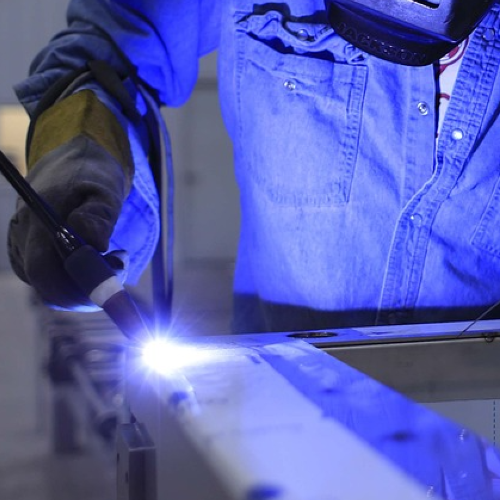
Although fusion welding is currently a high-performance joining technique for metals and alloys used in mechanical engineering, the fact remains that it gives rise to local geometric, structural (metallurgical constituents) and physical (internal elastic equilibrium) modifications, such that in the "as-welded" state, certain welded assemblies cannot fully benefit from the high mechanical and chemical performance conferred on the base material at the end of its manufacturing process. As a result, it becomes necessary either to use special deposition procedures during welding to minimize the impact of thermal cycles, or to subject the structure at the end of manufacture to various thermal or mechanical treatments or finishing operations to restore all or part of the mechanical characteristics affected by the welding operation.
After an essential reminder of the changes that can potentially be observed in the mechanical characteristics of the structure, geometry and internal equilibrium of welded joints, the article describes the effects of the various thermal, mechanical and local finishing treatments used to improve the performance of welded structures with regard to the various failure mechanisms they may encounter throughout their service life.
At the end of the article, readers will find a glossary and table of acronyms and symbols.

Exclusive to subscribers. 97% yet to be discovered!
Already subscribed? Log in!
KEYWORDS
residual stresses | Treatments | stress relieve
Welded mechanical parts - Thermal and mechanical treatments
 Condition of assemblies after welding operation
Article included in this offer
"Metal treatments"
(
128 articles
)
Updated and enriched with articles validated by our scientific committees
A set of exclusive tools to complement the resources
Bibliography
Exclusive to subscribers. 97% yet to be discovered!
Already subscribed? Log in!