Overview
ABSTRACT
Dynamic sealing is defined as preventing any fluid leakage between two mechanical parts moving relative to each other. It can be divided into two categories, reciprocating motion and rotational motion. Its role is crucial in hydraulic and pneumatic systems because a simple fluid leak can affect the smooth running and safety of the systems. This paper describes the different types of reciprocating dynamic seals and specifies the criteria for their selection according to the expected dynamic sealing.
Read this article from a comprehensive knowledge base, updated and supplemented with articles reviewed by scientific committees.
Read the articleAUTHOR
-
Abdelghani MAOUI : Design and services engineer - Affiliation Fluid and Sealing Technologies Department, Cetim, Nantes, France
INTRODUCTION
In mechanical engineering, sealing is said to be dynamic when it is applied between two parts in relative motion, i.e. rotation and/or translation. When there is no movement between the parts, sealing is said to be static. The latter is covered in the article
Dynamic sealing is considerably more involved than static sealing. Not only must a seal prevent the flow of certain fluids, as in the case of a static seal, but it must also be capable of performing this task in motion and with friction forces to take into account.
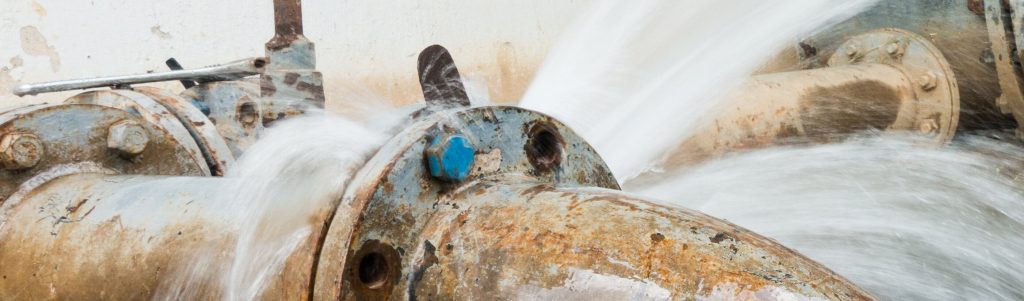
Containing a gas or liquid, by its very nature, is not easy. The permissible leak rate depends on the nature of the fluid to be sealed; leakage of expensive, toxic, corrosive, explosive or flammable fluids must be kept to a minimum. Seal life and reliability are also major concerns for users, to reduce equipment and process downtime.
Seal failure can have multiple consequences, in terms of equipment availability, operation and safety. Common examples show that highly complex assemblies, such as landing gear, can experience major problems as a result of a simple leak. Good dynamic sealing reliability is not often easy to achieve.
Indeed, dynamic sealing calls on a number of physics and chemistry concepts, in which the properties of materials and dynamic contact surfaces play an important role. In addition, the problems to be solved are varied, involving a large number of parameters that are difficult to optimize simultaneously. The best solutions in mechanical sealing techniques in general, and dynamic sealing in particular, are almost always the result of skilful compromises.
This article deals with so-called translational dynamic seals in which the relative motion between sealing parts is linear. It gives an introduction to the different types and degrees of sealing, and then describes the different technologies of translational dynamic sealing according to each degree of sealing: rigorous, controlled and relative. Dynamic rotary seals are covered in
At the end of the article, readers will find a glossary and a table of the notations used.

Exclusive to subscribers. 97% yet to be discovered!
Already subscribed? Log in!
KEYWORDS
dynamic seals | linear seals | leakage | dynamic sealing
Dynamic Seals Commonly Used in Mechanical Industry Dynamic seals for reciprocating motion
 Sealing types
Article included in this offer
"Mechanical functions and components"
(
212 articles
)
Updated and enriched with articles validated by our scientific committees
A set of exclusive tools to complement the resources
Bibliography
Exclusive to subscribers. 97% yet to be discovered!
Already subscribed? Log in!