Overview
ABSTRACT
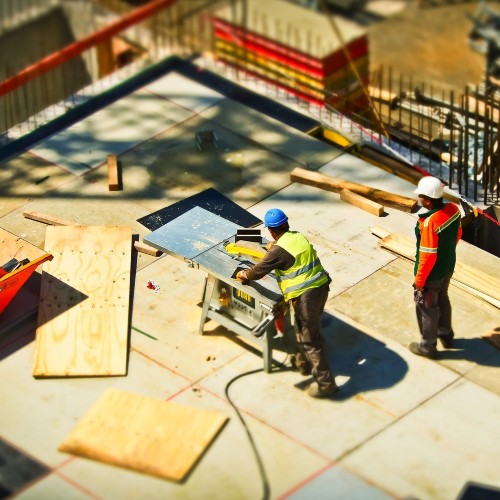
Many economist experts define the construction industry as the “brick and mortar” one. This qualification is the sign of a traditional activity which emphasizes the technical aspect without taking in account its impacts on the community development. The pandemic period is an opportunity to rethink construction. To do that we must link this activity and a new model to increase a better contribution for a sustainable society.
This transformation will imply to design new patterns for buildings. It’s the only way to improve the relation between the community and its territory and to increase the project relevance.
Read this article from a comprehensive knowledge base, updated and supplemented with articles reviewed by scientific committees.
Read the articleAUTHOR
-
Christophe GOBIN : Scientific advisor ESTP/IRC
INTRODUCTION
Philosophers have only interpreted the world in different ways; now it is a matter of transforming it." Karl Marx
It would be an understatement to say that the construction industry does not enjoy a very positive reputation. Certainly, some civil engineering works attract attention for their exceptional nature. However, current production is constantly being criticized for both the quality of its execution and the cost of its acquisition.
This observation is not just a mood inherent to a profession that has never gone beyond a so-called vernacular organization. It goes much deeper, since it also concerns access to housing, which is still far from meeting collective needs. Yet what is most surprising is the recurrence of this state of affairs. Reports on the situation are full of information, but no structural changes have been made. The sector's productivity remains as decried as ever, in spite of accompanying incentive measures that are proving ineffective.
In the French context, the public authorities have pursued a succession of unsuccessful policies, each of which has been called into question. The prefabrication of multi-family housing gave way to individual construction, itself criticized for its sprawling nature and destruction of the natural environment. The call for private-sector initiative was no more successful. In fact, a certain inevitability seems to accompany this economic sector, which is essential to the country's activity, since it is the leading contributor to national GDP.
However, the pandemic we are currently experiencing may offer the conditions for a new perspective on this issue.
If you think about it, this problem has never been tackled from a substantive point of view, but has always been dealt with from a technical point of view. To be even more explicit, it has never been considered from a societal point of view. The urban question was indeed raised in the 70s, but never received any real attention, since it was confined to a political quarrel of little weight in view of the inertia of this industrial sector. With the current health crisis, the terms of the debate are once again topical, since the very nature of the urban environment is being called into question. The discussion is no longer simply a technical problem of productivity, but concerns the nature of the built object itself.
The current health crisis is calling into question the very purpose of this economic sector. Building, of course, but for what purpose? This formulation is not neutral, as it raises two issues:
redefine the sector's contribution to the evolution of our lifestyles and collective organization;
...

Exclusive to subscribers. 97% yet to be discovered!
Already subscribed? Log in!
KEYWORDS
project | | processing | diagnosis | ecosystem | performance model | community
the construction of tomorrow - the matrix of living together
 Diagnosis
Article included in this offer
"Construction law and general management"
(
78 articles
)
Updated and enriched with articles validated by our scientific committees
A set of exclusive tools to complement the resources
Bibliography
Background information
- KINSEY (M.) - Productivité du secteur, - juin 2020 https://www.mckinsey.com/business-functions/operations/our-insights/the-next-normal-in-construction-how-disruption-is-reshaping-the-worlds-largest-ecosystem...
Exclusive to subscribers. 97% yet to be discovered!
Already subscribed? Log in!