Overview
Read this article from a comprehensive knowledge base, updated and supplemented with articles reviewed by scientific committees.
Read the articleAUTHOR
-
Vaclav POTOCEK : Technical Manager for Life ProductsGN Resources International (GNCZ) , Czech Republic
INTRODUCTION
Translation from English by Anne-Marie GAULIER
Aerosol analysis using PIXE involves several complementary aspects; the two main ones are methodology and application technology. The methodology includes :
• Setting up the study,
• Sampling and sample processing,
• Obtaining the spectrum,
• Spectrum analysis and quantization,
• Data processing,
• Interpretation.
Technology includes problems :
• configuration of the sampling device,
• PIXE equipment layout,
• selection and use of spectrum processing software.
These points are discussed below. Of course, it should be noted that they are so closely interrelated that we cannot separate them, despite the fact that some of them are common to all analysis techniques, not just PIXE.
In terms of scientific applications, PIXE aerosol analysis can be linked to both environmental research (including industrial technology research) and medicine. The main applications are :
• studies on ambient aerosols,
• studies on aerosols inside buildings,
• studies on aerosols in the respiratory tract.
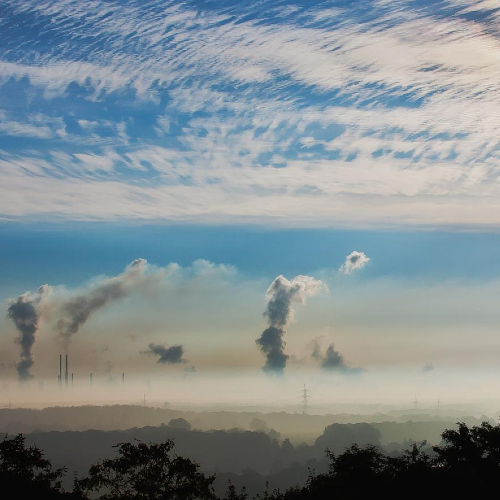
Ambient aerosol studies play an important role in environmental research. The data and conclusions obtained can contribute significantly to the study of air pollution transport, both global and local. Given the urgent need for comparable data in this research, it is very important to launch international programs using a unified methodology.
Since research must include meteorological data, knowledge of meteorology and the physics of the atmo-sphere is required, especially of the lower layers of the troposphere. The other important part of scientific knowledge lies in aerosol science, i.e. the physics and chemistry of particles in the air (e.g. particle aggregates, chemical reactions with air and water, sedimentation, etc.). If the PIXE method is to be used in research into indoor air pollution or its influence on health, knowledge of biology is required, e.g. anatomy and physiology of the respiratory system, as well as branches describing specific aspects of the indoor environment (such as heating, air conditioning, sorption on walls, etc.). For the analytical chemistry of aerosols in general, the most recent book is

Exclusive to subscribers. 97% yet to be discovered!
Already subscribed? Log in!
Aerosol analysis using the PIXE method
 Basic concepts. Sampling
Article included in this offer
"Analysis and Characterization"
(
276 articles
)
Updated and enriched with articles validated by our scientific committees
A set of exclusive tools to complement the resources
References
Exclusive to subscribers. 97% yet to be discovered!
Already subscribed? Log in!