Overview
ABSTRACT
Read this article from a comprehensive knowledge base, updated and supplemented with articles reviewed by scientific committees.
Read the articleAUTHOR
-
Richard GRABKOWSKI : Engineer from the Bordeaux Institute of Food Science and Technology - IAA trainer-consultant
INTRODUCTION
Confectionery belongs to a family of foods offering a wide variety of textures, shapes, colors and flavors to appeal to the widest possible range of consumers. What they all have in common is that sugar, mixed with other ingredients, is cooked to varying degrees, adding to their appeal. The textures available are numerous, and are the result of technologies specific to the various product families. Cooked sugars, for example, have a glassy texture thanks to high cooking temperatures and low residual humidity. Conversely, other confectionery products, such as jellies, benefit from a soft texture obtained by gelling and higher humidity. Still other products, such as dragées, are made by turbining to coat a core with a layer of crunchy sugar. These few examples quickly illustrate the full range of processes available to confectioners to create their famous sweets.
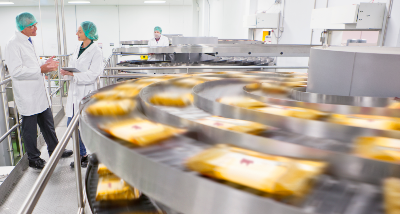
In the world of confectionery, tradition is the ally of modernity: artisan confectioners and apothecaries have always been at the origin of a multitude of original products, many of whose recipes are still almost exactly the same as when they were created. Only mechanization has overtaken manual techniques, even if the level of automation remains, on the whole, lower than that of neighboring industries such as chocolate-making.
The confectionery market has been stagnating for the past ten years. This levelling-off of sales seems to be linked to consumers' growing concern for their health: concern for a more balanced diet, the prevention of obesity and tooth decay in children are all factors that slow down the purchase of confectionery. To stimulate sales, manufacturers have stepped up the number of new products, with playful shapes and presentations, surprising colors and tastes, and the appearance of so-called "sugar-free" confectionery to make buyers feel less guilty.
There has also been a recent revival of interest in traditional regional products, which, after declining over the last two decades, are now enjoying renewed success. This phenomenon can be explained by the increase in the number of older consumers who like to rediscover the recipes of yesteryear, as well as by a population of adults looking for authentic products with natural ingredients.
This dossier takes a pragmatic, industrial approach to the world of confectionery, introducing readers to the major confectionery families. The confectioner's vocabulary, the specificities and technologies of production, and the keys to success are all made available to the reader as he goes along.

Exclusive to subscribers. 97% yet to be discovered!
Already subscribed? Log in!
Confectionery products
 Presentation
Article included in this offer
"Food industry"
(
270 articles
)
Updated and enriched with articles validated by our scientific committees
A set of exclusive tools to complement the resources
History
The origins of the first confectionery products date back to ancient times, when honey played an essential role in food preservation. Coating fruits, seeds and flowers in honey was a technique used in China, Egypt and the Middle East. Later, in Greek and Roman antiquity, treats such as raisins, dates and other fruits preserved in honey were served at the end of meals. Then, in the 4th century BC, the first sugar canes were cultivated...
Exclusive to subscribers. 97% yet to be discovered!
Already subscribed? Log in!