Overview
ABSTRACT
Bolted flange connections are widely used in industrial installations handling pressurized fluids, particularly in the nuclear, petrochemical, offshore drilling and naval industries. Their function is to ensure both the structural continuity of the circuit and the sealing of the pressure boundary. The reliability of these assemblies relies on the interaction between three main components: the flanges, the gasket and the bolting. This article presents the main characteristics of these components, their respective functions, and the principles ensuring their compatibility in the design of leak-tight joints. It also introduces the tightening control approach and the TBSS method (Tight Between Seal and Strength). It is a first part of a series devoted to bolted flange connections.
Read this article from a comprehensive knowledge base, updated and supplemented with articles reviewed by scientific committees.
Read the articleAUTHOR
-
Simon PLANCHE : Head of the Inspection and Regulatory Affairs Department (SIR) - EDF SA, Golfech Nuclear Power Plant, Golfech, France
INTRODUCTION
Bolted flange assemblies are widely used in many demanding industrial sectors, including nuclear facilities, petrochemicals, offshore drilling, and the shipbuilding industry. They are frequently integrated into systems that handle pressurized, high-temperature, cryogenic, or potentially hazardous fluids.
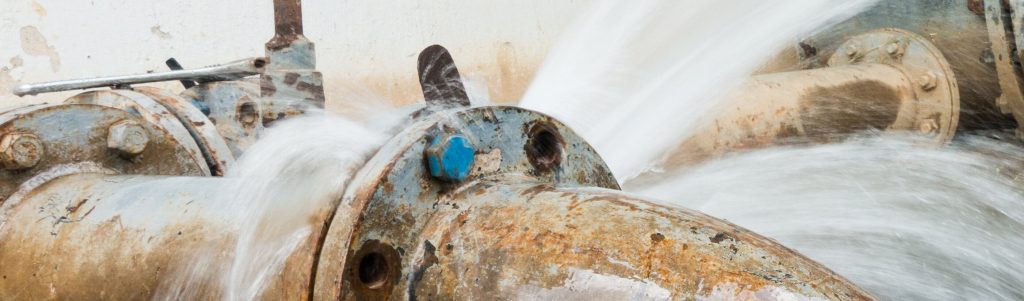
In these environments, a loss of seal integrity in a joint can have significant consequences. Failures can manifest in various forms, ranging from a simple leak to more severe phenomena, such as gasket extrusion, bolt ejection, or flange rupture. Mastering these assemblies is therefore a major industrial challenge, both to ensure the safety of people and the protection of the environment and property, and to guarantee the availability and performance of the facilities.
The operation of a bolted flange joint relies on applying the proper tightening torque to the bolts, which generates sufficient contact pressure on the gasket to ensure the joint is leak-tight. However, such a joint cannot be considered a simple juxtaposition of independent components. The flanges, gasket, and bolts constitute a mechanical system in which the components interact closely. The overall performance of the joint therefore depends on their combined behavior.
With this in mind, this article presents the main components of a bolted flange assembly and describes their essential characteristics. The objective is to provide designers with the necessary information to guide the selection of flanges, gaskets, and fasteners based on operating conditions and the characteristics of the fluid to be contained.
This overview serves as a first step toward understanding the fundamental principles of bolted flange assemblies. Subsequent articles in this series will address the mechanical modeling of these assemblies as well as methods for determining clamping force, particularly using the TBSS (Tight Between Seal and Strength) method.

Exclusive to subscribers. 97% yet to be discovered!
Already subscribed? Log in!
KEYWORDS
flange | gasket | bolt
Bolted flanges connections - Characteristics and components
 Characteristics of Bolted Flange Assemblies
Article included in this offer
"Mechanical functions and components"
(
215 articles
)
Updated and enriched with articles validated by our scientific committees
A set of exclusive tools to complement the resources
Bibliography
Exclusive to subscribers. 97% yet to be discovered!
Already subscribed? Log in!