Overview
ABSTRACT
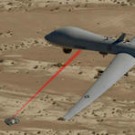
The history of stealth is fairly recent but has experienced a significant development over the past decades leading to the creation of several generations of stealth aircrafts and notably the Lockheed F22 and the F22 Rapto. Stealth aircrafts are conceived in order to deflect or absorb waves and send back to the radar a very attenuated signal. Stealth is based upon several basic principles linked to existing electromagnetic phenomena. The radar equivalent surface of the object must be reduced to the minimum so that it is detected by radars as late as possible. The design of a stealth aircraft is subjected to rules in terms of shape, cavities and choice of absorbing materials. Since these developments, stealth has been successfully applied to missiles, drones and warships.
Read this article from a comprehensive knowledge base, updated and supplemented with articles reviewed by scientific committees.
Read the articleAUTHOR
-
Fabrice AUZANNEAU : Head of the Embedded Systems Reliability Laboratory at CEA LIST
INTRODUCTION
In the early 1990s, new aircraft concepts were unveiled, designed to evade radar long enough to carry out their mission safely. Based on work dating back to the 1970s, stealth aircraft (such as the famous F-117) are designed to deflect or absorb waves and return a highly attenuated signal to the radar. Stealth is based on a few basic principles, which have since been successfully applied to missiles, drones and warships. Let's take a look at these principles and their implementation.
The figures in this dossier can be seen in color in the electronic version on the Techniques de l'Ingénieur website.

Exclusive to subscribers. 97% yet to be discovered!
Already subscribed? Log in!
EDITIONS
Other editions of this article are available:
Electromagnetic stealth
 Introduction
Article included in this offer
"Radar technologies and their applications"
(
73 articles
)
Updated and enriched with articles validated by our scientific committees
A set of exclusive tools to complement the resources
Bibliography
Exclusive to subscribers. 97% yet to be discovered!
Already subscribed? Log in!