Overview
ABSTRACT
Earth satellites and orbital space stations are exposed to collisions with space debris, whose number is growing since the space age beginning. The debris trajectories are continuously tracked in order to predict dangerous conjunctions. The collision risk is measured by a probability depending on the miss distance, the object sizes and the orbit uncertainties. Avoidance maneuvers induce service interruptions and propellant losses. They are carried out only in case of confirmed risk. The article presents the basis models, the conjunction detection method and the probabilistic formulation of the collision risk.
Read this article from a comprehensive knowledge base, updated and supplemented with articles reviewed by scientific committees.
Read the articleAUTHOR
-
Max CERF : Mission Analysis Engineer ArianeGroup, Les Mureaux, France
INTRODUCTION
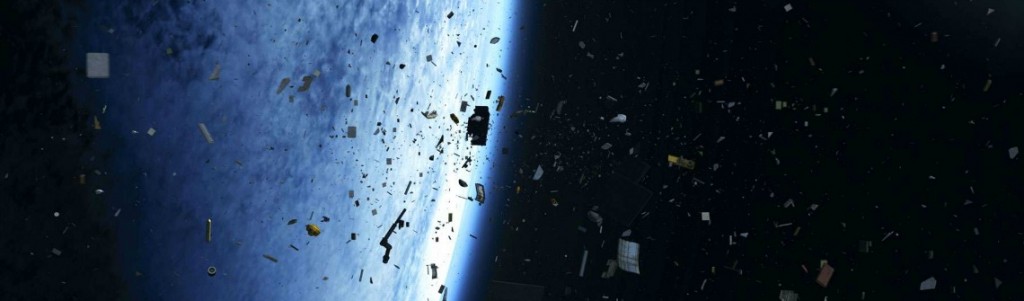
The proliferation of space debris poses a constant threat to operational satellites and the International Space Station. The number of pieces of debris larger than one centimeter is estimated at several hundred thousand. A high-speed collision with a piece of debris of this size can seriously damage a satellite. Among the most spectacular collisions were that of the French satellite Cerise with a piece of an Ariane 1 stage on July 24, 1996, and that of the Russian Cosmos 2251 and American Iridium 33 satellites on February 10, 2009.
Continuous monitoring of debris orbits has become necessary in order to anticipate risky conjunctions and program avoidance maneuvers. These maneuvers should only be carried out when there is a proven risk, as they disrupt operational service (or microgravity experiments for the International Space Station), and lead to unforeseen propellant consumption. The aim of monitoring is, on the one hand, to reliably detect possible conjunctions with all known debris and, on the other, to measure the risk by associating a probability with it, taking into account orbitography uncertainties. A critical probability threshold triggers a decision to maneuver. These assessments need to be repeated frequently, at least once a day, to trigger alerts as early as possible. Monte-Carlo methods based on numerical simulation are too time-consuming to process all the debris. Specific, faster techniques are employed with the aim of assessing risk quickly but reliably.
This article reviews the laws of orbital motion and the modeling of orbital uncertainties. It then presents the method for detecting conjunctions, the probabilistic formulation of the risk of collision and its analytical expression.

Exclusive to subscribers. 97% yet to be discovered!
Already subscribed? Log in!
KEYWORDS
space debris | conjunction | collision probability | space pollution
Space Trajectories. Collision Risks on Orbit
 Orbitography
Article included in this offer
"Aerospace systems"
(
77 articles
)
Updated and enriched with articles validated by our scientific committees
A set of exclusive tools to complement the resources
Bibliography
Exclusive to subscribers. 97% yet to be discovered!
Already subscribed? Log in!