Overview
Read this article from a comprehensive knowledge base, updated and supplemented with articles reviewed by scientific committees.
Read the articleAUTHOR
-
Christian ELICHEGARAY : Head of the Air Quality Monitoring Department at the French Environment and Energy Management Agency (ADEME)
INTRODUCTION
The need to step up the monitoring and prevention of air pollution in our regions led to the law on air and the rational use of energy of 12/30/1996. Among other things, this law established everyone's right to breathe air that is not harmful to their health, as well as the right to information on air quality and its effects. It also requires the implementation of various planning tools (regional air quality plans, atmospheric protection plans, urban travel plans, emergency measures) to prevent air pollution and its effects.
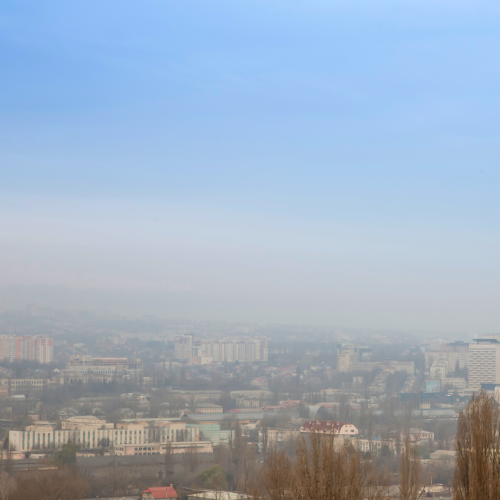
Atmospheric pollution results from changes in the chemical composition of the air, caused by human activities. It can manifest itself from the urban and local scale to the planetary scale, and the risks associated with these changes are not of the same nature depending on the spatio-temporal scale concerned. Changes in the chemical composition of the air on a planetary scale are manifested in particular by increased levels of greenhouse gases such as carbon dioxide or methane, and mainly generate a risk of major modification of the planet's climate. On the other hand, local pollution - in industrial or urban environments, for example - mainly presents risks to human health, due to the levels of pollutants such as sulfur oxides, nitrogen oxides and particulate matter. Other forms of pollution also occur on intermediate scales, notably in the form of acid-oxidizing pollution, and can affect ecosystems.
Various technical and scientific disciplines are involved in air pollution problems, and this dossier is intended as a general introduction to air pollution. It focuses on local and regional air quality problems, and will be followed by other dossiers dealing in greater detail with the themes addressed: regulatory framework, the state of knowledge and methods in the fields of air pollution toxicology and ecotoxicology, pollutant monitoring and effluent treatment technologies, air pollution simulation tools, etc.

Exclusive to subscribers. 97% yet to be discovered!
Already subscribed? Log in!
EDITIONS
Other editions of this article are available:
Air pollution — Introduction
 Atmospheric environment and quality determinants
Article included in this offer
"Environment"
(
524 articles
)
Updated and enriched with articles validated by our scientific committees
A set of exclusive tools to complement the resources