





Présentation
RÉSUMÉ
Les assemblages à brides boulonnées sont largement utilisés dans les installations industrielles mettant en œuvre des fluides sous pression, notamment dans les secteurs du nucléaire, de la pétrochimie, du forage offshore ou encore de l’industrie navale. Leur rôle est d’assurer simultanément la continuité structurelle du circuit et l’étanchéité de la barrière de pression. La maîtrise de ces assemblages repose sur l’interaction entre trois composants principaux : les brides, le joint d’étanchéité et la boulonnerie. Cet article présente les caractéristiques essentielles de ces composants, leurs fonctions respectives et les principes permettant d’assurer leur compatibilité dans la conception des liaisons étanches. Il introduit également la logique de maîtrise du serrage et la méthode TBSS (Tight Between Seal and Strength). Il constitue le premier volet d’une série consacrée aux assemblages à brides boulonnées.
Lire cet article issu d'une ressource documentaire complète, actualisée et validée par des comités scientifiques.
Lire l’articleAuteur(s)
-
Simon PLANCHE : Head of the Inspection and Regulatory Affairs Department (SIR) - EDF SA, Golfech Nuclear Power Plant, Golfech, France
INTRODUCTION
Bolted flange assemblies are widely used in many demanding industrial sectors, including nuclear facilities, petrochemicals, offshore drilling, and the shipbuilding industry. They are frequently integrated into systems that handle pressurized, high-temperature, cryogenic, or potentially hazardous fluids.
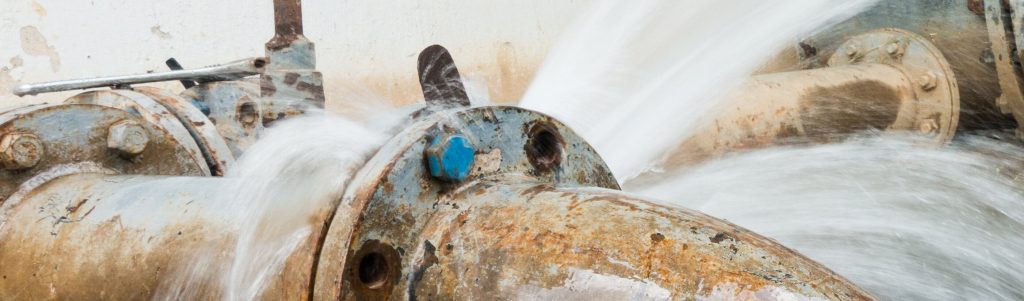
In these environments, a loss of seal integrity in a joint can have significant consequences. Failures can manifest in various forms, ranging from a simple leak to more severe phenomena, such as gasket extrusion, bolt ejection, or flange rupture. Mastering these assemblies is therefore a major industrial challenge, both to ensure the safety of people and the protection of the environment and property, and to guarantee the availability and performance of the facilities.
The operation of a bolted flange joint relies on applying the proper tightening torque to the bolts, which generates sufficient contact pressure on the gasket to ensure the joint is leak-tight. However, such a joint cannot be considered a simple juxtaposition of independent components. The flanges, gasket, and bolts constitute a mechanical system in which the components interact closely. The overall performance of the joint therefore depends on their combined behavior.
With this in mind, this article presents the main components of a bolted flange assembly and describes their essential characteristics. The objective is to provide designers with the necessary information to guide the selection of flanges, gaskets, and fasteners based on operating conditions and the characteristics of the fluid to be contained.
This overview serves as a first step toward understanding the fundamental principles of bolted flange assemblies. Subsequent articles in this series will address the mechanical modeling of these assemblies as well as methods for determining clamping force, particularly using the TBSS (Tight Between Seal and Strength) method.

Cet article est réservé aux abonnés.
Il vous reste 94 % à découvrir.
Déjà abonné ? Se connecter
DOI (Digital Object Identifier)
Présentation
 Glossary
Article inclus dans l'offre
"Fonctions et composants mécaniques"
(213 articles)
Actualisée et enrichie d’articles validés par nos comités scientifiques.
Quiz, médias, tableaux, formules, vidéos, etc.
Opérationnels et didactiques, pour garantir l'acquisition des compétences transverses.
Un ensemble de services exclusifs en complément des ressources.
6. Conclusion
A bolted flange assembly relies on the interaction of three main components: the flanges, the gasket, and the bolts. The overall performance of the joint depends on the combined behavior of these elements, which must be selected as a coherent system suited to the operating conditions of the installation.
The flanges hold the gasket in place and absorb the mechanical forces transmitted by the joint. The gasket’s function is to provide a seal against the fluid being transported. The bolts, in turn, apply and maintain the necessary contact pressure on the gasket to ensure the assembly remains leak-tight.
The selection of components is therefore a critical step in designing a reliable and durable assembly. Inappropriate choices can lead to premature degradation of the joint, loss of sealing integrity, or situations requiring repeated corrective maintenance.
The design of a bolted flange joint must therefore consider all interactions between its components, taking into account the specific limitations of each one. The central issue then becomes the tightening torque to be applied to the bolts to ensure a leak-tight seal while respecting the assembly’s mechanical strength limits.
The next article in this series focuses on the mechanical modeling of bolted flange assemblies and the analytical methods used to evaluate stresses in the various components—a prerequisite for determining the tightening torque.
Cet article est réservé aux abonnés.
Il vous reste 92 % à découvrir.
Déjà abonné ? Se connecter
Conclusion

Article inclus dans l'offre
"Fonctions et composants mécaniques"
(213 articles)
Actualisée et enrichie d’articles validés par nos comités scientifiques.
Quiz, médias, tableaux, formules, vidéos, etc.
Opérationnels et didactiques, pour garantir l'acquisition des compétences transverses.
Un ensemble de services exclusifs en complément des ressources.
BIBLIOGRAPHIE
-
(1) - LAMONS® - Gasket & fastener handbook, a technical guide to gasketing & bolted flanges - . – (2016).
-
(2) - LEFRANÇOIS (M.) - Metal-to-metal seals : the innovative route in static sealing - . – (2004).
-
(3) - PLANCHE (S.) - Assemblages à brides boulonnées – Modèle et calcul mécanique. - [BM 5 572] (2026).
-
(4) - PLANCHE (S.) - Assemblages à brides boulonnées – Méthode TBSS (Tight Between Seal and Strength). - [BM 5 573] (2026).
-
(5) - LEJEUNE (H.), OMNES (B.) - Étanchéité en mécanique – Étanchéité aux liaisons statiques. - [BM 5 418] (2023).
NORMES
-
Flanges and Their Assemblies – Circular flanges for pipes, valves, fittings, and accessories designated PN – Part 1: Steel flanges. - NF EN 1092-1 - 2018
-
Flanges and their assemblies – Circular flanges for pipes, valves, fittings, and accessories, designated Class – Part 1: Steel flanges, NPS ½″ to 24″. - NF EN 1759-1 - 2005
-
Metal products – Types of inspection documents. - NF EN 10204 - 2005
-
Flanges and Their Assemblies – Gasket specifications and test procedures related to design rules for circular flange assemblies with gaskets. - NF EN 13555 - 2014
-
Flanges and Their Assemblies – Bolting – Part 1: Selection of bolting. - NF EN 1515-1 - 2000
-
Flanges and Their Joints – Bolts – Part 2: Classification of bolting materials for steel flanges, designated PN. - NF EN 1515-2 - 2002
Cet article est réservé aux abonnés.
Il vous reste 95 % à découvrir.
Déjà abonné ? Se connecter
Article inclus dans l'offre
"Fonctions et composants mécaniques"
(213 articles)
Actualisée et enrichie d’articles validés par nos comités scientifiques.
Quiz, médias, tableaux, formules, vidéos, etc.
Opérationnels et didactiques, pour garantir l'acquisition des compétences transverses.
Un ensemble de services exclusifs en complément des ressources.
QUIZ ET TEST DE VALIDATION PRÉSENTS DANS CET ARTICLE
Entraînez-vous autant que vous le voulez avec les quiz d'entraînement.


L'expertise technique et scientifique de référence
Article inclus dans l'offre
"Fonctions et composants mécaniques"
(213 articles)
Actualisée et enrichie d’articles validés par nos comités scientifiques.
Quiz, médias, tableaux, formules, vidéos, etc.
Opérationnels et didactiques, pour garantir l'acquisition des compétences transverses.
Un ensemble de services exclusifs en complément des ressources.