





Présentation
RÉSUMÉ
Les assemblages à brides boulonnées sont largement utilisés dans les installations industrielles mettant en œuvre des fluides sous pression, notamment dans les secteurs du nucléaire, de la pétrochimie, du forage offshore ou encore de l’industrie navale. Leur rôle est d’assurer simultanément la continuité structurelle du circuit et l’étanchéité de la barrière de pression. La maîtrise de ces assemblages repose sur l’interaction entre trois composants principaux : les brides, le joint d’étanchéité et la boulonnerie. Cet article présente les caractéristiques essentielles de ces composants, leurs fonctions respectives et les principes permettant d’assurer leur compatibilité dans la conception des liaisons étanches. Il introduit également la logique de maîtrise du serrage et la méthode TBSS (Tight Between Seal and Strength). Il constitue le premier volet d’une série consacrée aux assemblages à brides boulonnées.
Lire cet article issu d'une ressource documentaire complète, actualisée et validée par des comités scientifiques.
Lire l’articleAuteur(s)
-
Simon PLANCHE : Head of the Inspection and Regulatory Affairs Department (SIR) - EDF SA, Golfech Nuclear Power Plant, Golfech, France
INTRODUCTION
Bolted flange assemblies are widely used in many demanding industrial sectors, including nuclear facilities, petrochemicals, offshore drilling, and the shipbuilding industry. They are frequently integrated into systems that handle pressurized, high-temperature, cryogenic, or potentially hazardous fluids.
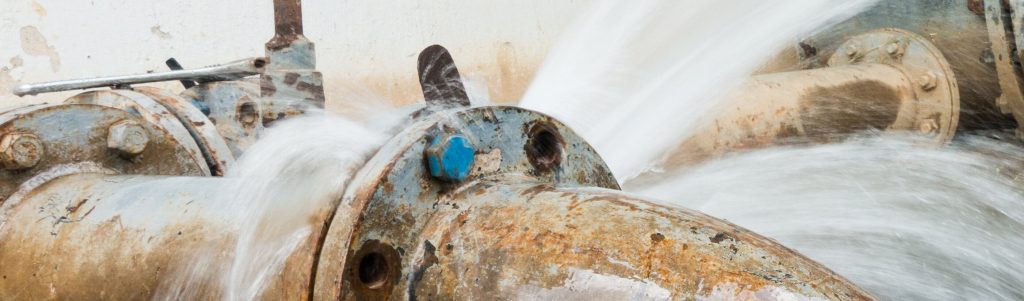
In these environments, a loss of seal integrity in a joint can have significant consequences. Failures can manifest in various forms, ranging from a simple leak to more severe phenomena, such as gasket extrusion, bolt ejection, or flange rupture. Mastering these assemblies is therefore a major industrial challenge, both to ensure the safety of people and the protection of the environment and property, and to guarantee the availability and performance of the facilities.
The operation of a bolted flange joint relies on applying the proper tightening torque to the bolts, which generates sufficient contact pressure on the gasket to ensure the joint is leak-tight. However, such a joint cannot be considered a simple juxtaposition of independent components. The flanges, gasket, and bolts constitute a mechanical system in which the components interact closely. The overall performance of the joint therefore depends on their combined behavior.
With this in mind, this article presents the main components of a bolted flange assembly and describes their essential characteristics. The objective is to provide designers with the necessary information to guide the selection of flanges, gaskets, and fasteners based on operating conditions and the characteristics of the fluid to be contained.
This overview serves as a first step toward understanding the fundamental principles of bolted flange assemblies. Subsequent articles in this series will address the mechanical modeling of these assemblies as well as methods for determining clamping force, particularly using the TBSS (Tight Between Seal and Strength) method.

Cet article est réservé aux abonnés.
Il vous reste 92 % à découvrir.
Déjà abonné ? Se connecter
DOI (Digital Object Identifier)
Présentation
 Bolts
BoltsArticle inclus dans l'offre
"Fonctions et composants mécaniques"
(213 articles)
Actualisée et enrichie d’articles validés par nos comités scientifiques.
Quiz, médias, tableaux, formules, vidéos, etc.
Opérationnels et didactiques, pour garantir l'acquisition des compétences transverses.
Un ensemble de services exclusifs en complément des ressources.
3. Gaskets
In a bolted flange assembly, the gasket ensures the continuity of the pressure barrier by filling in the irregularities on the flange faces. In theory, if the flanges were perfectly rigid, flat, and perfectly smooth (zero surface roughness), no gasket would be necessary. In practice, surface imperfections, elastic deformations caused by loads, as well as temperature and pressure variations require the use of a gasket capable of adapting to these stresses while maintaining the assembly’s seal.
Gaskets can be classified into three main categories: non-metallic, semi-metallic, and metallic, each offering specific performance characteristics in terms of pressure, temperature, and chemical resistance. Their selection is based on standardized mechanical characteristics, notably the gasket coefficient
and seating pressure
, which define, respectively, the minimum pressure required to ensure the initial seal and the residual pressure that must be maintained to prevent leaks (see § 3.2.3 and table 2).
3.1 Types of Seals
3.1.1 Non-metallic gaskets
Non-metallic gaskets are widely used in bolted flange assemblies due to their compressibility, their ability to adapt to irregularities in the seating surfaces, and their good performance under moderate operating conditions. They provide an effective seal at low or medium pressures and are particularly well-suited for chemical or corrosive environments, where compatibility with the fluid is essential.
They come in several major material families, each suited to specific conditions:
-
Elastomers: flexible polymers (EPDM, NBR, Viton, silicone, etc.) that provide a good seal under low contact pressures. Their selection depends heavily on the fluid, temperature, and operating environment.
-
PTFE: a thermoplastic highly resistant to aggressive chemicals. Available in virgin, filled, expanded, or coated...
Cet article est réservé aux abonnés.
Il vous reste 94 % à découvrir.
Déjà abonné ? Se connecter
Gaskets

Article inclus dans l'offre
"Fonctions et composants mécaniques"
(213 articles)
Actualisée et enrichie d’articles validés par nos comités scientifiques.
Quiz, médias, tableaux, formules, vidéos, etc.
Opérationnels et didactiques, pour garantir l'acquisition des compétences transverses.
Un ensemble de services exclusifs en complément des ressources.